Monday, October 31, 2011
Beautiful European Women : Greece
Labels:
athenian women,
beautiful greek women,
girls,
greece,
ladies,
women
Motorola to AXE 800 plus jobs ahead of Google Deal
Motorola Mobility (NYSE:MMI) said it will cut 800 jobs ahead of the closure of Google's (NASDAQ:GOOG) proposed $12.5 billion acquisition of Motorola, according to a regulatory filing.
According to a filing Motorola made late Friday with the Securities and Exchange Commission, the company will incur a charge of $31 million for the layoffs, made up of $27 million in severance costs and $4 million for closing down facilities. Motorola said the job cuts are global and that its mobile devices and set-top box businesses will both be affected by the job cuts, as will various corporate functions.
"Motorola Mobility continues to focus on improving its financial performance by taking actions to manage the company's costs," Motorola spokeswoman Jennifer Weyrauch-Erickson said in a statement to Bloomberg, adding that the cuts are unrelated to the proposed acquisition.
In the same filing, Motorola said it continues to expect the deal to close by late 2011 or early 2012, a target that is unchanged from when the companies announced the acquisition in August. In late September the Department of Justice asked both Google and Motorola for more information on the deal. Motorola shareholders will vote on the deal Nov. 17.
For the third quarter Motorola posted net revenues of $3.3 billion, up 11 percent from the third quarter of 2010. The company's net loss in the third quarter shrank slightly to $32 million, from $34 million in the third quarter of 2010. The company also reported a slight rise in its handset and smartphone shipments.
Sunday, October 30, 2011
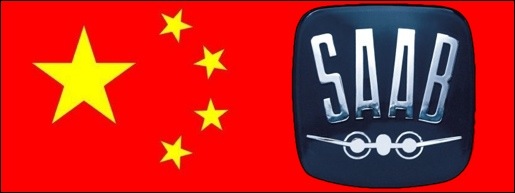
Saab the Property of China now
For you boyz 'n gals up der in the north that are proud about Northern European Industrial Prowess, Sweden is on the way to becoming a "service economy" if y'all know what I mean..
I think Mr. Borg should be more carefull about critisizing the Eurozone and should look to what's happening in his own house...
Labels:
borg,
china,
chinese companies,
crown,
eurozone,
kroner,
saab,
sweden,
swedish economy
Friday, October 28, 2011
Occupy Wall Street is right about nation’s skewed economic rewards
The Occupy Wall Street protestors are right in their assessment of how skewed the nation’s economic rewards have become.
In Occupy Wall Streeters are right about skewed economic rewards in the United States, EPI president Lawrence Mishel and economist Josh Bivens present 12 charts—detailing trends in income, wages, capital income and wealth—that highlight the economic inequality that developed between 1979 and 2007, pre-dating the recession.
The paper’s findings include the following:
Between 1979 and 2007, the incomes of the top 0.1% of households grew 390% and incomes of the top 1% grew 224%, while incomes of the bottom 90% saw gains over that whole period of just 5%.
Between 1979 and 2006, the annual wages of the top 0.1% grew 324% and those of the top 1% grew 144%, while the bottom 90% saw gains over that whole period of just 15%.
The ratio of the wealth held by the wealthiest 1% of households to the wealth held by the median household was 225-to-1 in 2009, up from 131-to-1 in 1983.
This week’s Economic Snapshot further illustrates the sobering fact that the top 1 percent captured almost 60 percent of all income gains between 1979 and 2007 while the bottom 90 percent of income-earning households captured less than 9 percent of all income gains over this same period.
EPI’s data and analysis of the nation’s startling income growth disparity between the highest earners and the vast majority of working Americans has been cited by multiple major media outlets, including the New Yorker, MSNBC,and the Atlanta Journal Constitution.
In Occupy Wall Streeters are right about skewed economic rewards in the United States, EPI president Lawrence Mishel and economist Josh Bivens present 12 charts—detailing trends in income, wages, capital income and wealth—that highlight the economic inequality that developed between 1979 and 2007, pre-dating the recession.
The paper’s findings include the following:
Between 1979 and 2007, the incomes of the top 0.1% of households grew 390% and incomes of the top 1% grew 224%, while incomes of the bottom 90% saw gains over that whole period of just 5%.
Between 1979 and 2006, the annual wages of the top 0.1% grew 324% and those of the top 1% grew 144%, while the bottom 90% saw gains over that whole period of just 15%.
The ratio of the wealth held by the wealthiest 1% of households to the wealth held by the median household was 225-to-1 in 2009, up from 131-to-1 in 1983.
This week’s Economic Snapshot further illustrates the sobering fact that the top 1 percent captured almost 60 percent of all income gains between 1979 and 2007 while the bottom 90 percent of income-earning households captured less than 9 percent of all income gains over this same period.
EPI’s data and analysis of the nation’s startling income growth disparity between the highest earners and the vast majority of working Americans has been cited by multiple major media outlets, including the New Yorker, MSNBC,and the Atlanta Journal Constitution.
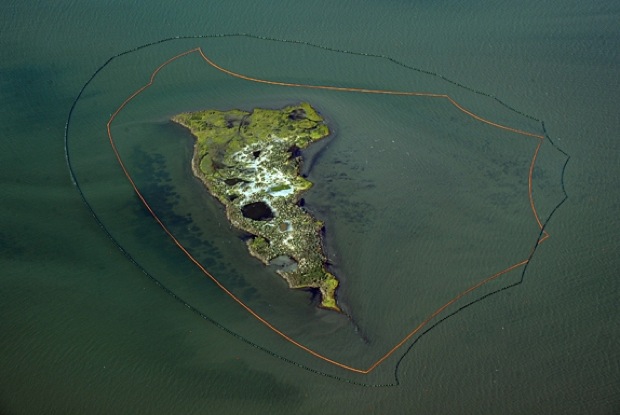
BP to InnoCentive: Sorry, We Don't Want Your 908 Ideas for Saving the Gulf

As we've noted before, there is no shortage of ideas when it comes to containing the Gulf oil spill. But what if you were BP, and you received almost 1,000 ideas proposed by a massive, global network of people who actually specialize in this kind of thing? You'd at least look at them right? Not a chance. BP has just refused 908 potential solutions provided by InnoCentive, an online crowdsourcing community.
Since 2006--and before that as part of Eli Lilly--InnoCentive has recruited corporations which sponsor crowdsourcing challenges for its over 200,000 "solvers." This group has tackled heavy issues for organizations like Proctor & Gamble and NASA, ranging from tuberculosis prevention to even successfully cleaning up another oil spill in Alaska. As of this week, InnoCentive's 908 solutions, proposed by scientists, engineers, and doctors all over the world--61% of solvers have Ph.Ds or masters degrees--included solutions inspired by angioplasty to a giant funnel made by tensile Teflon fabric.
When InnoCentive launched the challenge on their site April 30, they witnessed the fastest-ever response to a challenge in the history of the company. CEO Dwayne Spradlin was especially thrilled about the response because it was InnoCentive's first-ever sponsorless problem. "This is first challenge we've issued with no cash inducement," he tells FastCompany.com. "But in a crisis situation we thought our network would get involved because it was the right thing to do." Over 1,000 solvers registered to work on the challenge and Spradlin fielded a flood of phone calls and emails, even FedEx packages containing diagrams and alternative material samples.
On June 5, InnoCentive reached out to BP with the assistance of partners like the White House and Nature. BP offered an indication of interest and named two places of where InnoCentive could best help: remote sensing of oil and better skimming technology. InnoCentive passed this along to its community. But after that, BP was unsettlingly silent. "It has been a little bit frustrating, says Spradlin. "We have been going back and forth with government agencies and BP. It has taken a fairly long time." On June 19, BP finally indicated to InnoCentive they would not be needing their assistance, noting that it was "too complex and burdensome to add to already overstretched workdays." Spradlin says that sharing InnoCentive's ideas would cost BP nothing.
As another containment dome fails in the Gulf, Spradlin is sitting on almost 1,000, potentially more reliable solutions. But the one silver lining in all this is that Spradlin has realized InnoCentive's potential for mobilizing its fleet of solvers for emergencies in the future. He thinks of this experience as a wake-up call for their crowdsourcing network. "We know we've got an ability to tap bright minds in a variety of crisis situations," he says. "We know we've got the right tools to get people connected. Now we can prewire some of these things that will allow us to use them on demand."
I guess Carl Henrik unlocked telecom and slipped on oil...
Thursday, October 27, 2011
October 28 1940, OCHI : The Story of Lazarus
Lazarus was born to Konstantinos and Euterpe in a town near Smyrna Asia Minor, what is now Turkey some time in the early 1900s.
Lazarus remembers running with his parents for the nearest ship during the Greek genocide of 1922; he remembers holding his mother’s hand while his mother’s other hand was wrapped around his yet unbaptized baby sister.
The next thing Lazarus knew was that he was in a warehouse in Piraeus with 40 degree Celsius fever; his mother, little sister and father never made it aboard the ships that carried the Greek genocide survivors to Greece; or they boarded one of those French ships that tossed Greeks and Armenians to the sea to drown, or even worse, to face the hungry Turkish and Kurdish hoards that were dipping their bayonets into pregnant women and unborn children.
Lazarus was taken home by an Armenian family, who lived in Drougouti on the outskirts of Athens , and the patriarch of the family raised Lazarus and gave Lazarus work in his butcher shop. Lazarus was then forced to marry one of the family’s daughters, Maria who was in love with another man, a man the family objected to.
The marriage didn’t go to well ; at one time Maria smashed a pan on Lazarus’ bald head and told him that he wasn’t fit enough to even buy her cigarettes. So you see the Greco Italian war was salvation for Lazarus, and he quickly enlisted and headed for the front.
The Greek army did extremely well having decimated the Italian advance and having pushed the Italians to the Albanian Adriatic cost. But then the Yugoslavian front collapsed and the Wehrmacht sped through Yugoslavia forcing the Hellenic Armed forced to retreat back to the original Macedonian positions. Lazarus was the trumpeter who ordered the retreat; the problem was that his lips were frozen due to the Northern Epirus frost, so he ran around his regiment screaming “Theodora…Theodora” which was the vocal equivalent of the trumpet signal.
Lazarus found himself the Thessaloniki in Macedonia hiding in an abandoned railway carriage with an army comrade, hiding from the now German conquerors. There wasn’t too much space in the carriage so Lazarus was squatted down and his comrade was nestled above him with his legs on Lazarus’ shoulders. Lazarus felt warm liquid running down his shoulders and he angrily whispered to his comrade to stop pissing on him: the problem was that his comrade wasn’t pissing but rather his comrade was dead and what Lazarus was feeling was the hemorrhaging of the would that drained his army comrade of his life essence.
Lazarus joined the resistance, fought with EAM-ELLAS and then nestled up with a girlfriend in Thessaloniki Macedonia ; he refused however for one reason or another to give his former wife Maria a divorce. It could have been of course to maintain hold on his beloved daughter Zoe, the result of Lazarus’ marriage with Maria.
After the war, Lazarus returned to Athens married a new girlfriend named Vasso and started working in Karaiskakis stadium in Athens ; Lazarus was a devout Olympiakos fan ‘till the end.
Not a very intelligent man but a levendi and a brave man, as well as an admirer of the fair sex.
At one time Lazarus was dragged to court because he was involved in an embezzlement that he had no connection with; he had signed a document he didn’t understand and the result was that every felony was blamed on him and not on the actuators. The judge having understood the situation granted Lazarus innocence due to “malakia” or stupidity or idiocy depending on which word you prefer.
Lazarus lived well the his remaining years in Agios Ierotheos Peristeri and was a favorite in the local taverns. A devout favorer of ouzo, Lazarus died of Alzheimer’s disease in 1994 about 9 years after the death of his daughter Zoe….
Ericsson abandoning the mobile Handset Business
It's an end of an era. Ericsson is abandoning the mobile handset business.
Ericsson (NASDAQ:ERIC) confirmed that Sony will buy its 50 percent stake in their decade-old handset joint venture Sony Ericsson for around $1.47 billion, giving the Japanese electronics maker control over the company.
The companies said Sony Ericsson will become a wholly-owned subsidiary of Sony and will be integrated into Sony's platform of network-connected consumer electronics products. Sony will also get a broad intellectual property cross-licensing agreement and ownership of five essential patent families relating to wireless handset technology. Ericsson and Sony said they will set up a wireless connectivity initiative to bring mobility to a wide range of products. The deal is expected to close in January.
"During the past ten years the mobile market has shifted focus from simple mobile phones to rich smartphones that include access to Internet services and content," the companies said in a statement. "The transaction is a logical strategic step that takes into account the nature of this evolution and its impact on the marketplace."
"We can more rapidly and more widely offer consumers smartphones, laptops, tablets and televisions that seamlessly connect with one another and open up new worlds of online entertainment," Sony Chairman and CEO Sir Howard Stringer said in a separate statement.
Earlier this month the Wall Street Journal reported that Sony was close to buying Ericsson out of the joint venture, in a bid to integrate the handset company with its tablets and gaming consoles. Buying Ericsson's stake could cost between $1.3 billion and $1.7 billion, the report said, citing analyst estimates.
A top Sony executive said last week that Sony Ericsson is key to the company's plans to get games, email and other features into more mobile devices. Speaking at AllThingsD's Asia:D conference, Kazuo Hirai, Sony's executive deputy president, said that "the Sony Ericsson management team understands how important it is to be a part of this Sony strategy" and that the two are in lockstep whether it is part of a joint venture or not. He also said Sony's videogame unit is "in discussions" to expand PlayStation Suite, its smartphone and tablet application for Google's (NASDAQ:GOOG) Android operating system platform, to a more devices not made by Sony or Sony Ericsson.
Sony Ericsson, based in London and with 7,500 employees, posted a net profit of around $126 million in 2010 after quarters of losses. The company, which has undertaken a transition to smartphones by relying on Android, has watched its market share shrink from 4.3 percent in the third quarter of 2009 to 1.7 percent in the second quarter this year, according to research firm Gartner.
There have also been recent indications that Sony Ericsson is moving more toward a product alignment with Sony. The handset maker's Xperia Play Android phone is essentially a mobile Sony PlayStation device married to a phone, and has access to Sony's video game library. Additionally, Sony Ericsson's flagship Android phones, including the Xperia Arc, connect to Sony TVs through DLNA technology. Sony will now become one of a few companies, including LG and Samsung, to house both home entertainment and mobile phone operations, and will likely try and tie together all of its offerings even more tightly than it already has.
'"Sony now has all the components to compete with Samsung and Apple (NASDAQ:AAPL)," Canalys analyst Pete Cunningham told Reuters. "The big question now is...can it execute?"
"Sony should be a big player in the digital home," BDA China anlayst Duncan Clark told Bloomberg. "The mobile phone is becoming much more central to electronics. If they are going to be successful and fend off Samsung, they need to do this."
BT given two weeks to block Newzbin2
BT has 14 days to block access to file-sharing website Newzbin2, a High Court judge has ordered in a copyright-infringement case brought by US film studios.
The order, handed down by Mr Justice Arnold in a written judgment on Wednesday, enforces a ruling by the judge in July that the ISP must prevent its customers from accessing Newzbin2. The case, brought by six US film studios, ended in the judge deciding that BT was aware the site was being used for copyright infringement "on a large scale".
The case marks the first time a British ISP has been told to block a website to protect rights holders' revenues. The rights holders are 20th Century Fox, Universal, Warner Bros, Paramount, Disney and Columbia Pictures, all members of the Motion Picture Association of America (MPAA).
"In my judgment, the costs of implementing the order should be borne by BT," Arnold said. "BT is a commercial enterprise which makes a profit from the provision of the services which the operators and users of Newzbin2 use to infringe the studios' copyright. As such, the costs of implementing the order can be regarded as a cost of carrying on that business."
BT must pay the £5,000 cost of implementing the block, plus any other costs. In addition, it has to cover the costs incurred by the studios in fighting BT's appeal against an earlier judgment against it, running from December to July.
Newzbin2, which describes itself as the 'Google of Usenet', indexes binary fragments of movies and other content uploaded by people to the internet discussion system. Others can then piece those fragments together to recreate the full item.
Under the court order, BT must use its Cleanfeed tool — usually used to block porn — to filter and stop traffic to all of Newzbin2's URLs and IP addresses. The MPAA will provide the company with the URLs to block, according to BT's spokesman. In the event of BT being supplied with the wrong URL, Newzbin2 or the affected party will have to take that up with the MPAA.
The group behind Newzbin2 released a client in September that they said would let people get around Cleanfeed to access the file-sharing site. In his judgment in July, Arnold recognised that BT would not be able to stop users who encrypted traffic using a virtual private network (VPN), or who bounced traffic through a proxy service such as The Onion Router (Tor).
"Whatever the forms of blocking, people will quickly find a way round that," ORG campaigner Peter Bradwell told ZDNet UK. "It should be a concern that methods of encryption and avoidance will become normalised. It wouldn't be a surprise to see an enforcement arms race, with demands for increasingly intrusive forms of enforcement, which could undermine privacy protections."
Bradwell said rights holders should focus on giving consumers better legal sites, with a wider choice of content, to gain more revenues.
The ruling sets a precedent that could lead to ISPs being forced to police content, according to voice and data network company Interoute.
"[It's] BT today — but who knows who will be, knowingly or unknowingly, hosting this website tomorrow with the same outcome? The next stop will be having the ISPs/telcos vetting content, and that would be an unsustainable burden," said Interoute director Lee Myall.

A High Court ruling means that BT has two weeks to block the file-sharing site Newzbin2, in the first case of its kind. Photo credit: Cindy Andrie/Flickr
The case marks the first time a British ISP has been told to block a website to protect rights holders' revenues. The rights holders are 20th Century Fox, Universal, Warner Bros, Paramount, Disney and Columbia Pictures, all members of the Motion Picture Association of America (MPAA).
"In my judgment, the costs of implementing the order should be borne by BT," Arnold said. "BT is a commercial enterprise which makes a profit from the provision of the services which the operators and users of Newzbin2 use to infringe the studios' copyright. As such, the costs of implementing the order can be regarded as a cost of carrying on that business."
BT must pay the £5,000 cost of implementing the block, plus any other costs. In addition, it has to cover the costs incurred by the studios in fighting BT's appeal against an earlier judgment against it, running from December to July.
The ISP will review the order, but has no immediate plans to appeal the High Court judgment, a BT spokesman told ZDNet UK. "That option is open, but it's not necessarily going to be a route that we go down," he said.– Peter Bradwell, ORGWhatever the forms of blocking, people will quickly find a way round that.
Newzbin2, which describes itself as the 'Google of Usenet', indexes binary fragments of movies and other content uploaded by people to the internet discussion system. Others can then piece those fragments together to recreate the full item.
Under the court order, BT must use its Cleanfeed tool — usually used to block porn — to filter and stop traffic to all of Newzbin2's URLs and IP addresses. The MPAA will provide the company with the URLs to block, according to BT's spokesman. In the event of BT being supplied with the wrong URL, Newzbin2 or the affected party will have to take that up with the MPAA.
The group behind Newzbin2 released a client in September that they said would let people get around Cleanfeed to access the file-sharing site. In his judgment in July, Arnold recognised that BT would not be able to stop users who encrypted traffic using a virtual private network (VPN), or who bounced traffic through a proxy service such as The Onion Router (Tor).
Policing the internet
The Open Rights Group (ORG), a civil rights campaign organisation, said there is a danger that rights-holder enforcement such as the Newzbin2 block could push the general public into using more encryption. This would make the task of policing the internet more difficult and potentially more intrusive, it said."Whatever the forms of blocking, people will quickly find a way round that," ORG campaigner Peter Bradwell told ZDNet UK. "It should be a concern that methods of encryption and avoidance will become normalised. It wouldn't be a surprise to see an enforcement arms race, with demands for increasingly intrusive forms of enforcement, which could undermine privacy protections."
Bradwell said rights holders should focus on giving consumers better legal sites, with a wider choice of content, to gain more revenues.
The ruling sets a precedent that could lead to ISPs being forced to police content, according to voice and data network company Interoute.
"[It's] BT today — but who knows who will be, knowingly or unknowingly, hosting this website tomorrow with the same outcome? The next stop will be having the ISPs/telcos vetting content, and that would be an unsustainable burden," said Interoute director Lee Myall.
Nokia sees 'new dawn' in Lumia Windows Phones
Nokia has introduced the Lumia 800 and Lumia 710, the first smartphones from the Finnish manufacturer to run Microsoft's Windows Phone operating system.
Chief executive Stephen Elop presented the new flagship handsets at the Nokia World 2011 conference on Wednesday, saying "Lumia is a new dawn for Nokia". He also took the opportunity to take a friendly jab at other Windows Phone manufacturers.
"The Lumia is the first real Windows Phone," Elop told the audience in London. "We are signalling our intent, right now, right here to be the leaders in smartphone design."
The Lumia 800, previously codenamed Sea Ray, runs Windows Phone 7.5 Mango and closely resembles the existing MeeGo-powered Nokia N9 in appearance. Of the two new handsets, it has the better specifications and the higher price. It has a 3.7-inch Amoled touchscreen display, an 8-megapixel camera with Carl Zeiss optics, 1.4GHz single-core processor with hardware acceleration and Internet Explorer 9.
It supports Windows Phone Mango native features such as live tiles and Microsoft Office integration, which can give access to documents stored on corporate servers as well as locally. The Office integration means that as well as the 16GB of internal memory, owners will get the standard 25GB of free storage on the Windows Sky Drive cloud.
Applications such as Drive will be available on Windows Phone-based devices from other manufacturers. Nokia will be able to differentiate its package via features such as offline navigation, which other hardware makers might not be able to provide.
These features should help Nokia's smartphones stand out from competitors, according to IDC mobile analyst Al Hilwa.
"Music and Navigation offline is an idea whose time has come — kudos to Nokia for working on this," Hilwa told ZDNet UK. "The devices really show off the Windows Phone live tile user interface: it is a welcome departure from the sea of icons you see in the current crop of smartphones and provides some great new opportunities for developers to integrate their apps into the UI."
The Lumia 800 will cost around €420 (£367) before taxes or subsidies, and it will launch in France, Germany, Italy, Netherlands and Spain as well as the UK next month. Operators Orange, Vodafone and Three have already confirmed they will carry the smartphone when it is available in the UK, though none has revealed pricing.
The second handset, the Lumia 710, is a "more affordable" device, according to Nokia, though it includes many of the same features as the 800. It comes with a 1.4GHz processor, a 5-megapixel camera and the same social People Hub integration as Windows Phone 7 devices. The mid-market handset is also scheduled to arrive in November and will cost roughly €270.
Neither of the Lumia phones provides near-field communications (NFC) capability for uses such as contactless payments, as Windows Phone Mango does not support NFC.
"In the coming weeks, these devices will share the store shelves among several popular Android devices, the new iPhone 4S and even some new Blackberry 7 devices," Jeronimo noted. "Consumers don't know the Windows Phone user interface or its advantages."

Nokia has unveiled the Lumia 800 running Windows Phone Mango. Photo credit: Ben Woods
"The Lumia is the first real Windows Phone," Elop told the audience in London. "We are signalling our intent, right now, right here to be the leaders in smartphone design."
The smartphone debut comes after a tricky 12 months for Nokia, in which it carried out a transition from self-developed mobile OSes to Windows Phone. Elop, who left his post as head of Microsoft's business division to lead the mobile device maker a year ago, has described Nokia as "years behind" its rivals, such as Apple's iPhone and Android. A lot is riding on Nokia's Windows Phone-based range, and Elop has said the company's goal is to make sure its handsets are clearly differentiated from other Windows Phone-based handsets.– Stephen Elop, NokiaThe Lumia is the first real Windows Phone. We are signalling our intent, right now, right here to be the leaders in smartphone design.
The Lumia 800, previously codenamed Sea Ray, runs Windows Phone 7.5 Mango and closely resembles the existing MeeGo-powered Nokia N9 in appearance. Of the two new handsets, it has the better specifications and the higher price. It has a 3.7-inch Amoled touchscreen display, an 8-megapixel camera with Carl Zeiss optics, 1.4GHz single-core processor with hardware acceleration and Internet Explorer 9.
It supports Windows Phone Mango native features such as live tiles and Microsoft Office integration, which can give access to documents stored on corporate servers as well as locally. The Office integration means that as well as the 16GB of internal memory, owners will get the standard 25GB of free storage on the Windows Sky Drive cloud.
'Surprise at every turn'
"With the Lumia 800 our intention is to surprise you at every turn. This is a smartphone that defies convention," Kevin Shields, senior vice president of product management, said at the conference.The Lumia 800 will ship with a few unexpected options as standard, such as Nokia Drive free turn-by-turn voice guided navigation. It will also have Mix Radio, which lets owners store up to four playlists and download up to 20 tracks from each playlist for offline playback. The playlists last for four weeks, after which users are asked to connect via Wi-Fi to renew the Mix Radio licence.
These features should help Nokia's smartphones stand out from competitors, according to IDC mobile analyst Al Hilwa.
"Music and Navigation offline is an idea whose time has come — kudos to Nokia for working on this," Hilwa told ZDNet UK. "The devices really show off the Windows Phone live tile user interface: it is a welcome departure from the sea of icons you see in the current crop of smartphones and provides some great new opportunities for developers to integrate their apps into the UI."
The Lumia 800 will cost around €420 (£367) before taxes or subsidies, and it will launch in France, Germany, Italy, Netherlands and Spain as well as the UK next month. Operators Orange, Vodafone and Three have already confirmed they will carry the smartphone when it is available in the UK, though none has revealed pricing.
The second handset, the Lumia 710, is a "more affordable" device, according to Nokia, though it includes many of the same features as the 800. It comes with a 1.4GHz processor, a 5-megapixel camera and the same social People Hub integration as Windows Phone 7 devices. The mid-market handset is also scheduled to arrive in November and will cost roughly €270.
Neither of the Lumia phones provides near-field communications (NFC) capability for uses such as contactless payments, as Windows Phone Mango does not support NFC.
Building a base
Elop did not give a US launch date for the handsets, saying only that Nokia will outline a portfolio of products for the US in early 2012. This disappointed Hilwa, who nevertheless conceded "it is right for Nokia to play where it is strong first and build a strong base for Windows Phone internationally"."Despite the speed of development, the quality of the devices and the competitive pricing, Nokia will not be able to drive significant volumes in the coming months," the IDC mobile analyst said. "The reason for that is not linked to the devices themselves, but to the low Windows Phone OS penetration and awareness among consumers. Microsoft's OS represented two percent of total smartphone shipments by the end of the second quarter 2011 — the lowest share ever.
"In the coming weeks, these devices will share the store shelves among several popular Android devices, the new iPhone 4S and even some new Blackberry 7 devices," Jeronimo noted. "Consumers don't know the Windows Phone user interface or its advantages."
Tuesday, October 25, 2011
AT&T offers complete Cisco IPTV solution
Cisco (Nasdaq: CSCO) is partnering with AT&T (NYSE: T) on the industry's first wireless IPTV service, allowing the telco to deploy its U-verse service over an 802.11n Wi-Fi connection. The companies said the service would start deploying Monday.
The Cisco wireless TV solution will deliver standard-definition and high-definition video programming to multiple receivers with built-in or integrated Wi-fi.
Cisco said a single wireless access point--its VEN401--will be able to support two receivers connected to TVs and said its ISB7005 wireless receiver also functions as a total home HD DVR, allowing consumers to view and manage DVR recordings wirelessly from a wired DVR in the home.
The solution is part of Cisco's Videoscape portfolio that it introduced at last year's CES.
Wireless TV allows service providers increased flexibility and faster installation without having to pull wire throughout the home, and it even allows expanded customer self-installation with Wi-Fi kits.
The receivers will cost consumers $49 and a monthly fee of $7.
The Cisco wireless TV solution will deliver standard-definition and high-definition video programming to multiple receivers with built-in or integrated Wi-fi.
Cisco said a single wireless access point--its VEN401--will be able to support two receivers connected to TVs and said its ISB7005 wireless receiver also functions as a total home HD DVR, allowing consumers to view and manage DVR recordings wirelessly from a wired DVR in the home.
The solution is part of Cisco's Videoscape portfolio that it introduced at last year's CES.
Wireless TV allows service providers increased flexibility and faster installation without having to pull wire throughout the home, and it even allows expanded customer self-installation with Wi-Fi kits.
The receivers will cost consumers $49 and a monthly fee of $7.
Sprint will deploy LTE advanced or 4g in first half of 2013
Sprint Nextel (NYSE:S) will deploy LTE-Advanced technology on its 800 MHz spectrum by the first half of 2013, a key executive said. Speaking at a breakfast meeting at the 4G World conference here, Sprint's vice president of network development and engineering, Iyad Tarazi, said that the company will deploy LTE-Advanced Release 10 in a 10x10 configuration by the first half of 2013. The company estimates that with LTE-Advanced it will be able to achieve 12-15 Mbps download speeds.
Tarazi also provided additional details on the company's extensive Network Vision upgrade, which will include the deployment of LTE using the company's 1900 MHz spectrum with a planned commercial launch of LTE by mid-2012. The company plans to have 250 million to 277 million POPs covered with LTE by the end of 2013. At that point, Tarazi said the company will have a bigger LTE footprint than its existing CDMA network.
Tarazi said that the company plans to launch at least 12 LTE devices next year and although Sprint will initially offer voice service over its CDMA 1X network and data over its LTE network, it will eventually migrate to Voice over LTE. Tarazi said Sprint will launch VoLTE devices in the first quarter of 2013.
Interestingly, Tarazi revealed that the company will end 2011 with about 20 percent of its traffic riding on Clearwire's (NASDAQ:CLWR) 4G WiMAX network, which Tarazi said Sprint Nextel will continue to support for many years because of its agreement with the wholesale provider. Clearwire has said it needs to raise between $150 million and $300 million for the maintenance of its existing WiMAX network and $600 million to begin deploying LTE-Advanced network technology.
Tarazi added that Sprint will continue to invest in its EV-DO network to support its existing 3G smartphone customers, including its new iPhone 4S subscribers. Part of that investment includes small cells. Tarazi said the company currently has more than 500,000 femtocells deployed and he expects that to grow to more than 1 million by the first half of 2013. In addition, he expects the company will deploy LTE picocells in 2012.
On the backhaul front, Tarazi said that the company currently uses Ethernet over leased fiber lines for its backhaul but is also deploying Ethernet microwave technology where leased lines are not available.
Looking for work ?
Labels:
employement options,
employment,
forty five years old,
internet,
looking for work,
male,
online jobs,
workers
Wikileaks shuts off publication after funds dry up
Whistleblower site Wikileaks has halted its publication of leaked documents, after an embargo by credit-card payment processors caused its funding to plummet.
"We are forced to temporarily suspend publishing whilst we secure our economic survival," Wikileaks said in a statement on Monday. "For almost a year we have been fighting an unlawful financial blockade. We cannot allow giant US finance companies to decide how the whole world votes with its pocket."
For now, the group will focus on fundraising and pursuing lawsuits to get the banking restrictions on donations lifted, Wikileaks founder Julian Assange said on Monday at a Frontline Club press conference in London.
"This financial blockade is an existing threat to Wikileaks," said Assange. "If the blockade is not torn down by the end of the year, the organisation cannot continue in its work."
The banking restrictions have stopped 95 percent of donations to the group, according to Assange. He estimated that Wikileaks has lost tens of millions of dollars in consequence and noted the organisation expects to have costs of $3.5m (£2.2m) next year.
Wikileaks spokesman Kristinn Hrafnsson, an investigative journalist, told the press conference that Wikileaks is involved in legal cases in the UK, the US, Iceland and Australia to try to have the blocks lifted.
In addition, it has joined an antitrust complaint to the European Commission, made by payments company Datacell against Visa Europe and MasterCard Europe in July. The Competition Unit of the European Commission declined to comment on Monday.
"This is a problem that affects all online web-based secure transfers of information," he said, claiming "a number of certificate authorities are in effect state controlled".
As an organisation, Wikileaks has about 20 staff and about 800 volunteers, according to Assange. During a major release of documents, the organisation hires more people.
No funds raised by Wikileaks will go towards Assange's ongoing extradition case. The Wikileaks founder is wanted for questioning over sexual coercion allegations in Sweden.

Wikileaks founder Julian Assange has said the whistleblower site must suspend publication of leaked documents due to financial difficulties. Photo credit: BBC
For now, the group will focus on fundraising and pursuing lawsuits to get the banking restrictions on donations lifted, Wikileaks founder Julian Assange said on Monday at a Frontline Club press conference in London.
"This financial blockade is an existing threat to Wikileaks," said Assange. "If the blockade is not torn down by the end of the year, the organisation cannot continue in its work."
The banking restrictions have stopped 95 percent of donations to the group, according to Assange. He estimated that Wikileaks has lost tens of millions of dollars in consequence and noted the organisation expects to have costs of $3.5m (£2.2m) next year.
Cut off payments
MasterCard, Visa and PayPal cut off processing of payments made to Wikileaks after the group published hundreds of thousands of confidential US embassy documents. The financial institutions said they had done so because Wikileaks had engaged in illegal activity, and their terms and conditions did not allow this.In July, Iceland-based data-hosting service provider Datacell, which offered payment gateway services to Wikileaks, said it was again able to handle donations via Visa, MasterCard and American Express. However, this respite lasted only a day.– WikileaksFor almost a year we have been fighting an unlawful financial blockade. We cannot allow giant US finance companies to decide how the whole world votes with its pocket.
Wikileaks spokesman Kristinn Hrafnsson, an investigative journalist, told the press conference that Wikileaks is involved in legal cases in the UK, the US, Iceland and Australia to try to have the blocks lifted.
In addition, it has joined an antitrust complaint to the European Commission, made by payments company Datacell against Visa Europe and MasterCard Europe in July. The Competition Unit of the European Commission declined to comment on Monday.
New submissions system
Assange said Wikileaks will open a new submissions system for whistleblowers on 28 November. The system will not rely on digital certificates to validate the submissions process."Intelligence agencies have infiltrated a number of certificate agencies," said Assange, citing the example of the DigiNotar breach, which he believes to be connected with the Iranian government.
As an organisation, Wikileaks has about 20 staff and about 800 volunteers, according to Assange. During a major release of documents, the organisation hires more people.
No funds raised by Wikileaks will go towards Assange's ongoing extradition case. The Wikileaks founder is wanted for questioning over sexual coercion allegations in Sweden.
Monday, October 24, 2011
Australia and the Mature Worker
WHAT do Elle Macpherson, Madonna, Julia Gillard and Barack Obama have in common?
All being over-45s, they would be considered "mature age" workers in Australia and thus likely to be discriminated against solely on the basis of their age, says Age Discrimination Commissioner Liz Broderick.
"Age discrimination in recruitment and employment in Australia today appears to be pervasive, systemic, invisible and accepted, and people need to realise it might affect their employability sooner than they think," Ms Broderick will tell an Australian Institute of Family Studies seminar in Melbourne today.
She says she was aghast when told in a briefing on age discrimination that 45 was now considered the starting point for "mature age" workers, The Australian reports.
"I was quietly going into shock, thinking to myself, \'Hang on -- this can\'t be. That\'s me! I\'m 47 years old. I\'m a mature-age worker\'," she says in her speech.
"Put bluntly, at some stage from around the age of 45 onwards, we all run the risk of encountering age discrimination in relation to employment," she says.
"We\'ve all heard of \'don\'t send me CVs of anyone over 40\'," she says. Australia has lower workforce participation rates for mature workers than most OECD countries.
Even within a workplace, opportunities for advancement are denied older workers.
"They are seen as less efficient, less trainable and less valuable than people younger than them. Mature-age workers can be denied access to promotion and training because they are seen as offering \'limited returns\'," she says.
"Not only does this represent a potentially serious leakage of skills and talent ... but it also strikes at the core of our human right to dignity and respect."
All being over-45s, they would be considered "mature age" workers in Australia and thus likely to be discriminated against solely on the basis of their age, says Age Discrimination Commissioner Liz Broderick.
"Age discrimination in recruitment and employment in Australia today appears to be pervasive, systemic, invisible and accepted, and people need to realise it might affect their employability sooner than they think," Ms Broderick will tell an Australian Institute of Family Studies seminar in Melbourne today.
She says she was aghast when told in a briefing on age discrimination that 45 was now considered the starting point for "mature age" workers, The Australian reports.
"I was quietly going into shock, thinking to myself, \'Hang on -- this can\'t be. That\'s me! I\'m 47 years old. I\'m a mature-age worker\'," she says in her speech.
Ms Broderick says by 2020 four in 10 Australian workers will be 45 or older, creating a significant problem for the nation\'s future productivity if employers continue to see older workers as washed up.
"We\'ve all heard of \'don\'t send me CVs of anyone over 40\'," she says. Australia has lower workforce participation rates for mature workers than most OECD countries.
Even within a workplace, opportunities for advancement are denied older workers.
"They are seen as less efficient, less trainable and less valuable than people younger than them. Mature-age workers can be denied access to promotion and training because they are seen as offering \'limited returns\'," she says.
"Not only does this represent a potentially serious leakage of skills and talent ... but it also strikes at the core of our human right to dignity and respect."
Saturday, October 22, 2011
Σπουδές στον Καναδά
Labels:
δουλειά,
εκπαίδευση,
εύρεση,
καναδά,
μετανάστες,
μετανάστευση,
μετανάστης,
Πανεπιστήμια,
σπουδές καναδα
Android Ice Cream Sandwich Look, Top Features and Functions
There are few things in this world I despise more than software updates. Downloading hundreds of files, waiting for the progress bar to fill, restarting the device – it’s all a thankless chore. Usually.But Google’s Android 4.0 operating system, better known by its tasty nickname “Ice Cream Sandwich“, or ICS, is far from a mere mobile OS update. Ice Cream Sandwich is a complete OS overhaul that includes tweaks ranging from the geekily esoteric (widget resizing!) to the most surface-level of interface improvements (think “shinier”, care of faux-polished surfacing effects). It’s also destined for both Android smartphones and tablets, unifying Google’s mobile OS platforms for the first time.
Google invited me to its Mountain View campus for hands-on time with the Samsung Galaxy Nexus, the flagship device on which Ice Cream Sandwich will launch sometime in November. Android Vice President of Engineering, Hiroshi Lockheimer, gave me a deep-dive tour of the new software, and, by the time I left, I was stoked to upgrade to one of the most anticipated Android releases to date.
A Revamped User Interface
“Frankly, there’s something I’ve heard people say about Android for a while,” Lockheimer tells me inside Google HQ on Wednesday. “It’s a cool OS, but it’s a bit rough around the edges.”It’s true. I’ve been an Android user since I switched from a BlackBerry years ago, and I’ve never used an iPhone as my primary mobile device. But I hear the exact same thing from every iOS user who’s ever taken Android for a spin: “It doesn’t feel finished.”
Relative to competing mobile OSes, Android’s release cycle runs at a breakneck pace, with major software version releases debuting about every six months. Lockheimer began working on Android over five years ago (before Android was really “Android”), and he’s survived nine different version launches in about four years. In that same four-year period, Apple iterated its iOS just four times.
The Android team’s mandate to continuously iterate is admirable, but according to Lockheimer, it accounts for some of Android’s so-called roughness.
“It’s just a mindset thing,” Lockheimer says. “Moving that fast, you don’t get to spend as much time as others do ironing out the fine points.”
Nonetheless, Ice Cream Sandwich is the closest to a “finished” version of Android I’ve ever seen. The team spent an incredible amount of time on refining the little things, from changing details as minor as the opacity of the notifications background (it’s now translucent, so you can see the app tray beneath it), to as major as redesigning the phone’s lock screen to look more like that of Honeycomb (aka Android 3.0, Google’s current tablet OS). It’s this collection of subtle touches and flourishes that comprise an enormous change in overall OS feel — a whole much greater than the sum of its parts.
Even Android’s system-wide typeface was reimagined. “Roboto,” Android’s new official font, is spread across all parts of the OS containing text. Android user experience chief Matias Duarte says the font serves a dual purpose — “modern, yet approachable” with mechanical forms underscored by a “cheerful demeanour”. I think it’s pleasant to look at, even if it does appear to be a variant of Helvetica.In order to appreciate the biggest interface changes in Ice Cream Sandwich, you must first consider that it’s essentially a union of Android’s phone and tablet interfaces, two drastically different UI designs intended for entirely different form factors. The new OS makes obsolete all the physical buttons currently gracing Android smartphones, replacing them with virtual keys (just like those first introduced in Honeycomb in February). Similarly, home screen widgets are now moveable and resizable, and organised under a new tab in the app menu.
In a strange amalgamate of added security and high-tech playfulness, the new “Face Unlock” uses the front-facing camera to scan and verify your face before granting access to your phone. The feature uses advanced facial recognition technology developed by Pittsburgh Pattern Recognition, a company Google acquired earlier this year.While Face Unlock looks pretty darn sweet, reliable functionality is (currently) hit or miss. It worked about three out of the five times I tried it, and it quite publicy failed to recognise a Google employee during the Ice Cream Sandwich launch demo in front of international press. Regardless, you can still use a backup PIN or pattern entry code to unlock devices, so you and your unrecognizable mug won’t be left out in the cold.
What’s more exciting than a phone that knows your face? A phone that plays well with others. Using Near Field Communications (NFC) technology, you’ll be able to share content between Ice Cream Sandwich devices with “Android Beam”. By tapping the back of your phone to the back of a compatible handset, you can swap web pages, apps and whatever else Google or software developers enable for transfer in the future.Google has trumpeted the benefits of NFC ever since launching the Nexus S smartphone last year, asserting that the technology will soon change the way we use our phones in the course of everyday life. For example, Google Wallet — a major Google e-commerce initiative supported by CitiBank Mastercard, with more credit companies on the way — allows users to pay for purchases at retail stores with simple waves of their smartphones (assuming, of course, the retailers have the proper NFC reader technology installed).
I was bummed that Lockheimer wasn’t able to show me Android Beam in action when I visited — his Galaxy Nexus was running a different build of Ice Cream Sandwich than the demo unit I held. Regardless, sharing web pages between phones isn’t the Android Beam feature that really excites me. We should all be more interested in the NFC innovations that haven’t yet been announced.
Imagine being able to “encircle” one another using our Google+ accounts with a mere tapping of phones. Or perhaps exchange contact info with a quick Nexus bump. Who knows, maybe in the future a quick Android Beam tap will be good enough for a marriage licence in Las Vegas. The possibilities are as frightening as they are endless.
A Wealth of New ‘Inspired’ Features
For all the new features Ice Cream Sandwich contains — and there are too many to include in total here — some seemed a bit, well, familiar to me. Like UI deja vu.For example, take “People”, the new, renamed and redesigned contacts application. Instead of scrolling down a bland list of named entries – a la Gingerbread and its OS predecessors — People spawns what Duarte calls a “magazine-style” thumbnail-view approach to browsing your contacts, replacing text entries with the faces of your friends and acquaintances. The feature is immediately evocative of one of the best parts of Microsoft’s Metro UI for Windows Phones.
You’re also able to drag and drop apps on top of one another, creating clusters of apps organised into individual folders. iOS, anyone? I think so.
And yes, thank god, you’ll finally be able to take Android screenshots by pushing the power and volume buttons simultaneously. It may not be a feature everyone needs, but if you spend a good portion of your work life assembling online posts about Android, the screenshot feature is a game changer.
But of all of these familiar features, one of my favourites is the inclusion of a “swiping” manoeuvre that lets you navigate back and forth between separate pages of different app icons. It’s been available in Honeycomb and iOS, and now it comes to Android phones as well. Cooler still, you’re able to quickly eliminate individual elements from your notifications menu, instead of being required to clear them all at once. Lockheimer’s team likes to call it the “line-item veto”.
I mentioned to Lockheimer how familiar some of the new Android features feel. And it’s also worth noting that both Lockheimer and user experience head Matias Duarte previously worked on software at Palm, which developed the gesture-based, swipe-friendly webOS. So how much of their work — and work done by other OS developers — “inspired” the new Android, so to speak?“People expect gestures today,” Lockheimer told me, adding that public expectation is influenced by all of today’s mobile platforms, not just Android. Actions such as the “long press” — which entails holding your finger on an app or widget longer than usual in order to spawn an options menu — remains a part of Android, but new gesture-based movements allow users to “surface a lot more of the actions they weren’t already aware of,” Lockheimer says. In essence, Android’s existing accessibility options, however quirky, are still available for Android nerds and other power users, but now it will be easier for novices to navigate the system as well.
In a brilliant addition for those who have difficulty staying on top of monthly data usage, Ice Cream Sandwich comes with an app that lets you monitor data consumption on a granular level. You can see exactly which apps are eating the most bandwidth, and even investigate usage on a day-by-day basis — helpful if you want to know just how much YouTube-ing you did last Thursday, and how much of your data budget it cost you.
“This sort of data translates to real money,” Lockheimer says.
Personally, I’m not quite that scrutinous — I’m on an unlimited data plan — but I can see stingy (or analytics-driven) nerds loving this feature.
Faster Photography
My discussion with Lockheimer slowly segues to Ice Cream Sandwich’s launch vehicle, the Samsung Galaxy Nexus, and its camera features. In terms of raw specs, the camera is no beast; at 5 megapixels, it’s about par for the smartphone course. But for this camera, Lockheimer says, pixels aren’t the point.“Rather than getting into the megapixel wars, we wanted to give people what they want,” Lockheimer tells me as he turns on the camera with a left-flick of his thumb on the lock screen (another new shortcut). “They want to take a picture now.”
He then fires off six shots in rapid succession, with no more than a few tenths of a second between each exposure. I’ve never seen a smartphone camera take pictures this fast. And I’ve been around the block.
It turns out that as you finish taking one photo, the phone begins to save the file in the background while immediately letting you take the next shot. It’s slick as hell, and the camera’s image quality doesn’t suffer terribly despite its average resolution.
As our meeting winds down, Lockheimer looks visibly tired. He has been questioned all day by tech journalists itching to get a first look at the new OS, and I’m sure he’s hit the same talk points a hundred times over. So I try to throw him a curveball: “Of everything you’ve shown me today,” I ask him, “what are you the most proud of?”He pauses for a beat, nodding, thinking. “It’s really the entire package we’re delivering,” he tells me. It’s not a spicy answer, but I can understand Lockheimer’s reluctance to “name a favourite child” given all he’s endured to see Ice Cream Sandwich reach fruition: hours and hours of coding, tweaking, testing and troubleshooting, as well as four months of eating his own dogfood on test devices prior to the OS’s public debut in Hong Kong this week.
So, no, it’s not about individual features. It’s the whole OS itself.
As November’s public release looms closer, the true litmus test for Ice Cream Sandwich is still to come. Will the masses have a hankering for sweets, or will they reach for an apple?
I don’t pretend to know the answer, but I’ll say this: Ice Cream Sandwich is smooth, polished and more elegant than any Android OS before it.
Friday, October 21, 2011
Silicon Valley's New Hiring Strategy
In Silicon Valley, some dare to ask: Why hire a PhD, when a self-taught kid is just as good?
Adam Passey, 28
Medford, Oregon
Former VP of information and technology at a marketing agency
HIRED BY IGN
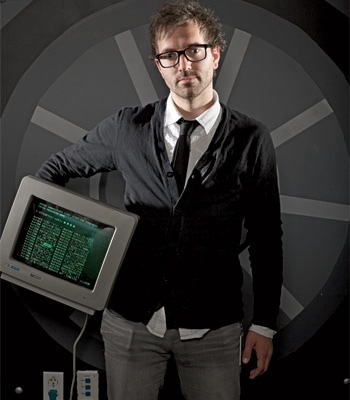
"I had one job for 10 years, and a lot of the systems I worked on were proprietary, so I couldn't show them as examples of my work. Getting hired at IGN has been a dream of mine, but I never applied because I always thought it was out of reach. It's humbling now to think that people here see something in me." | Photo by Toby Burditt
Medford, Oregon
Former VP of information and technology at a marketing agency
HIRED BY IGN
"I had one job for 10 years, and a lot of the systems I worked on were proprietary, so I couldn't show them as examples of my work. Getting hired at IGN has been a dream of mine, but I never applied because I always thought it was out of reach. It's humbling now to think that people here see something in me." | Photo by Toby Burditt
On an August afternoon, Adam Passey, 28, steps up to the front of IGN Entertainment's lunchroom in a rumpled cardigan and hipster glasses, and bounces through a presentation on a hub for mobile games that he spent the summer coding. IGN's engineering managers are impressed. Passey added features that other similar hubs don't have. But they're particularly impressed because, by conventional measures, Passey shouldn't even be here.Silicon Valley companies have notoriously strict hiring standards for engineers. They want grads from the country's top computer-science programs, like Stanford's and MIT's, or people with sparkling résumés and deep experience. Passey, from Medford, Oregon, didn't even graduate from college. "I briefly studied computer science at college, but I wasn't really excited about the actual degree program," he says.
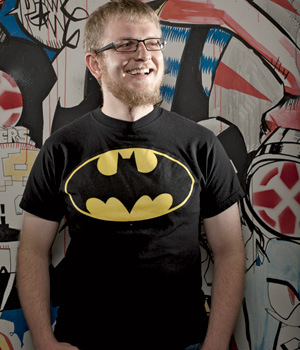
But he's here because IGN's president, Roy Bahat, is part of a small but growing movement of tech leaders who are rethinking what coders they're looking to hire--and for that matter, how the industry approaches coding in general. "Software is thought of as a science," Bahat says, sitting in a conference room painted to look like the underwater city of BioShock games. "But what if it's not a science? What if it's more like a craft? Or even an art? If you wanted to hire somebody who could be a great craftsperson, you wouldn't look for somebody with a PhD in that craft."
That may sound democratic, but it's also a response to a hard-learned business reality: The battle for talent in Silicon Valley has gotten expensive. Monied players like Facebook and Google regularly poach each other's employees by offering big salaries and sweet perks. Smaller startups lure those same developers with promises of greater responsibility, interesting work, and potentially lucrative stock options.
"Flipping burgers to scrape together enough cash to buy Portal 2? Blow our minds while you're here and we'll hire you."
--IGN Advertisement
IGN is a division of News Corp. But because Rupert Murdoch isn't flooding the firm with Fox News-style cash--and nor is it well-known enough to have top grads pounding down its doors--the company has to find talent in other ways.--IGN Advertisement
That's why it developed Code Foo.
The program, which ran this summer, brought in people with a core aptitude for programming, then spent six weeks "teaching them something to see if we could get them up to a level where we actually might want to hire them," Bahat says. IGN specifically downplayed the importance of experience and education. "Flipping burgers to scrape together enough cash to buy Portal 2?" read its recruitment ad. "Blow our minds while you're here and we'll hire you."
Sure enough, the 28 people accepted into the program (out of the 104 who applied) were a diverse bunch. One worked in a call center, another at a medical-device company, and a third managed a grocery store. Aged 20 to 30, only half of the group had college degrees in a technical field, and not necessarily in computer science.
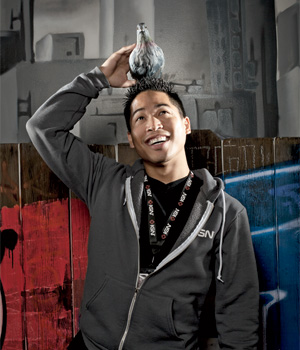
Trevor Boone, 26
Flagstaff, Arizona
Stay-at-home dad
NOT HIRED BY IGN
"For the last two years, my wife and I have been saving up so I could take time off to learn to code on my own and eventually move into the tech world. We weren't planning on doing it for another year or so, but after the experience at IGN, we're going to do it now." | Photo by Toby Burditt
Flagstaff, Arizona
Stay-at-home dad
NOT HIRED BY IGN
"For the last two years, my wife and I have been saving up so I could take time off to learn to code on my own and eventually move into the tech world. We weren't planning on doing it for another year or so, but after the experience at IGN, we're going to do it now." | Photo by Toby Burditt
Alex Ivlev, 26
Russia
Just graduated from Wilmington University
HIRED BY IGN
"I sent resumes to every big tech company I knew. But I came from a university no one had ever heard of. The market is tough. If you don't have a degree from Harvard or Yale, you don't have a chance. I spent eight years sacrificing, hoping that one day it would all pay off." | Photo by Toby Burditt
Russia
Just graduated from Wilmington University
HIRED BY IGN
"I sent resumes to every big tech company I knew. But I came from a university no one had ever heard of. The market is tough. If you don't have a degree from Harvard or Yale, you don't have a chance. I spent eight years sacrificing, hoping that one day it would all pay off." | Photo by Toby Burditt
Darren Matsumoto, 24
San Jose
Just graduated from the University of California
HIRED BY IGN
"I'd always built desktop software, so building things for IGN was like writing with my left hand. Coming here gave me the opportunity to learn about the tech industry in the Bay Area. Before, I was just looking for jobs in San Diego and Los Angeles. Now I think, Why limit myself?" | Photo by Toby Burditt
San Jose
Just graduated from the University of California
HIRED BY IGN
"I'd always built desktop software, so building things for IGN was like writing with my left hand. Coming here gave me the opportunity to learn about the tech industry in the Bay Area. Before, I was just looking for jobs in San Diego and Los Angeles. Now I think, Why limit myself?" | Photo by Toby Burditt
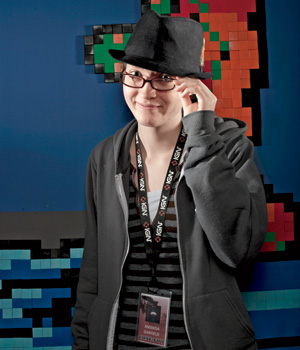
Amanda Garfield, 24
Spanish Fork, Utah
Works in tech support
NOT HIRED BY IGN
"I don't know if IGN realized this, but when you offer someone a job that they have the experience for, one job is about the same as the next. But when you do that for someone who doesn't have that experience, you're giving them a chance at a life that they couldn't otherwise have had." | Photo by Toby Burditt
Spanish Fork, Utah
Works in tech support
NOT HIRED BY IGN
"I don't know if IGN realized this, but when you offer someone a job that they have the experience for, one job is about the same as the next. But when you do that for someone who doesn't have that experience, you're giving them a chance at a life that they couldn't otherwise have had." | Photo by Toby Burditt
Code Foo is hardly the only such experiment in the marketplace. In India, local offices from the likes of Microsoft and IBM swallow up the best programmers--so an online office applications company called Zoho identifies promising high-school students whose families can't afford to send them to college, then trains them itself. The program began six years ago, and about a tenth of Zoho's 1,400 employees, and 20% of its new engineers, are graduates of it.
"It's not charity," says Zoho CEO Sridhar Vembu. "It works for everybody. We find great employees, and they make us money."At IMVU, a California-based firm, cofounder and Lean Startup guru Eric Ries scours online developer forums for potential hires. "We all want to find the next Mark Zuckerberg or Steve Jobs," Ries says, "but [the tech industry] only looks in very specific places. All kinds of people aren't on that radar."
"If you only looked at their résumés and said, 'Should we interview this person based on this résumé?', there wouldn't necessarily be a reason to say yes."
--IGN president Roy Bahat
Where some see opportunity in unconventional recruiting, others just see wishful thinking. Sure, Zuckerberg and Jobs were college dropouts, but there's a reason they're in select company: There just aren't many like them.--IGN president Roy Bahat
"I don't think it's as simple as saying lots of people who don't have a lot of schooling or who were never good at schooling will be great programmers," says Rob Mee, CEO of San Francisco's Pivotal Labs, which develops applications for companies like Twitter and Groupon. "It's not that they have to go to university or go to a great program. But a lot of great programmers, even if they are self-taught, are people who end up excelling academically at some level."
Mee does, however, give the less-accredited a shot. He asks all candidates to do a hands-on coding exercise, to assess how well they express their ideas and think on their feet--an effort that can level the competition.
Of course, one could choose to see efforts like IGN's more skeptically: Less-educated workers cost less, don't they? Bahat swats that idea away. He says he'll pay atypical applicants the same salaries of regular entry-level employees. "Talent in the technology industry quickly finds its market," he says. "There is no cheap labor."
Bahat hoped that his Code Foo experiment would produce one or two good hires. To his surprise and delight, the talent pool was so deep that IGN extended offers to eight--including Passey, who presented in the lunchroom.
All eight accepted.
"It's not like if you looked at their résumés, you would have said it's impossible that they would be qualified for the jobs," Bahat says. "But if you only looked at their resumes and said, 'Should we interview this person based on this résumé?', there wouldn't necessarily be a reason to say yes. They're the kind of people we would have overlooked."
We Don't Need No Education
Not everyone at the top sported a big résuméCommon knowledge: Facebook's Mark Zuckerberg excused himself from Harvard University. He was 19, but clearly had better things to do with his time. Rare as he might be, the business world has other innovators with a dearth of degrees to frame. If they weren't so self-motivated, who would have hired them?
--Dan Mascai
Dropped out of boarding school in 1966
Age: 16
Dropped out of the University of Texas, Austin, in 1984
Age: 19
Dropped out of the University of Texas, Austin, in 1963
Age: 20
Dropped out of New York University in 2005
Age: 19
Dropped out of Fullerton College in 1974
Age: 20
Dropped out of high school in 1918
Age: 16
Dropped out of Reed College in 1972
Age: 18
Dropped out of City College of New York in 1977
Age: 20
Dropped out of boarding school in 1975
Age: 16
Dropped out of Harvard University in 1975 (received honorary degree in 2007)
Age: 19
Dropped out of Parsons School of Design in 1967
Age: 18
Dropped out of the University of Wisconsin, Madison, in 1887
Age: 20
Thursday, October 20, 2011
Muammar Gaddafi Dead
Google unveils Ice Cream Sandwich Android 4.0
Google has formally revealed Ice Cream Sandwich, also known as Android 4.0, alongside the first handset to use it, the Samsung-made Galaxy Nexus.
Ice Cream Sandwich, unveiled on Tuesday, is in the unusual situation of being a direct successor to two separate versions of Android: 'Gingerbread' version 2.4, and 'Honeycomb' version 3.0. Gingerbread is a smartphone OS, and Honeycomb is for tablets only, but Ice Cream Sandwich is intended to reunify the overall Android experience.
Google has made widgets resizable in Ice Cream Sandwich, and has refreshed the designs of the Gmail and Calendar apps. The Android browser has also been revamped, offering a new tab manager, private browsing and bookmark synchronisation with the desktop Chrome browser.
The Contacts facility is now the People app, which features integrated updates from Google+ and other "social services", Rubin said.
The company has introduced features that make use of recent Android handsets' near-field communications (NFC) capabilities. A function called Android Beam lets people "instantly share web pages, YouTube videos, maps, directions and apps by simply tapping two phones together", Rubin added.
The Nexus line is traditionally used to showcase the latest version of Google's mobile operating system in its stock form, without manufacturer customisation. Samsung made Galaxy Nexus's predecessor, the Nexus S, which was the first device to run Gingerbread.
The Galaxy Nexus has a 4.65-inch screen that is larger than the 4-inch screen of the Nexus S but retains its predecessor's face-fitting curvature. Resolution has seen a significant upgrade from 480 x 800 pixels to 1280 x 720 pixels, more commonly referred to as 720p high definition (HD) — this is the native resolution of Ice Cream Sandwich, bringing a tablet-grade pixel count to a much smaller screen.
Samsung's new device also has a 1.2GHz dual-core processor, and comes with either '4G' LTE or HSPA+ connectivity, depending on which standard has been rolled out in the buyer's country.
The phone has a 5-megapixel rear-facing camera and a 1.3-megapixel front-facing alternative for video-calling and for unlocking the device — a new feature in Ice Cream Sandwich called Face Unlock lets the owner access the OS by smiling at their handset.
According to Google, the Galaxy Nexus will go on sale in Europe, North America and Asia from November.
The company has not yet indicated when Ice Cream Sandwich will become available as an upgrade for existing Gingerbread handsets. Based on precedent, it should be pushed out over-the-air to the Nexus S first, as Nexus phones have a direct link back to Google and do not need to wait for manufacturer customisation in order to receive OS version upgrades.

Google has formally unveiled the latest version of Android, Ice Cream Sandwich, alongside Samsung's Galaxy Nexus smartphone. Photo credit: Aloysius Low/CNET Asia
"With Ice Cream Sandwich, our mission was to build a mobile OS that works on both phones and tablets, and to make the power of Android enticing and intuitive," Google mobile chief Andy Rubin wrote in a blog post. "We created a new font that's optimised for HD displays and eliminated all hardware buttons in favour of adaptable software buttons."
The Contacts facility is now the People app, which features integrated updates from Google+ and other "social services", Rubin said.
The company has introduced features that make use of recent Android handsets' near-field communications (NFC) capabilities. A function called Android Beam lets people "instantly share web pages, YouTube videos, maps, directions and apps by simply tapping two phones together", Rubin added.
Galaxy Nexus
Google's mobile chief made the big Ice Cream Sandwich announcement alongside Samsung in Hong Kong. The Korean company will have the first device to run Android 4.0, the Galaxy Nexus.The Nexus line is traditionally used to showcase the latest version of Google's mobile operating system in its stock form, without manufacturer customisation. Samsung made Galaxy Nexus's predecessor, the Nexus S, which was the first device to run Gingerbread.
It's small, it's simple and it's useful. The ZDNet UK app is available for download from the Android Market.
The Galaxy Nexus has a 4.65-inch screen that is larger than the 4-inch screen of the Nexus S but retains its predecessor's face-fitting curvature. Resolution has seen a significant upgrade from 480 x 800 pixels to 1280 x 720 pixels, more commonly referred to as 720p high definition (HD) — this is the native resolution of Ice Cream Sandwich, bringing a tablet-grade pixel count to a much smaller screen.
Samsung's new device also has a 1.2GHz dual-core processor, and comes with either '4G' LTE or HSPA+ connectivity, depending on which standard has been rolled out in the buyer's country.
The phone has a 5-megapixel rear-facing camera and a 1.3-megapixel front-facing alternative for video-calling and for unlocking the device — a new feature in Ice Cream Sandwich called Face Unlock lets the owner access the OS by smiling at their handset.
According to Google, the Galaxy Nexus will go on sale in Europe, North America and Asia from November.
The company has not yet indicated when Ice Cream Sandwich will become available as an upgrade for existing Gingerbread handsets. Based on precedent, it should be pushed out over-the-air to the Nexus S first, as Nexus phones have a direct link back to Google and do not need to wait for manufacturer customisation in order to receive OS version upgrades.
Subscribe to:
Posts (Atom)