Tuesday, May 31, 2011

326 Million Dual-Mode 4G Devices to be Activated by 2016

MARAVEDIS RESEARCH :


MONTREAL, Canada, May 31, 2011 - 326 Million Dual-Mode (3G + LTE) Devices will be Activated by 2016 according to Maravedis' latest research titled "Global 4G Device Forecast 2011-2016". "All LTE devices activated during 2010, including USB data cards, modems and notebooks, were single-mode," said Cintia Garza, author of the report. "However, LTE+3G smartphones have emerged during 2011 as more LTE operators begin to add LTE to their device offering, in particular smart phones whose adoption will be key to LTE uptake." In the United States, Sprint's early success with WiMAX smart phones suggests a very promising uptake for LTE smart phones.


Many other carriers around the world are also looking at introducing smart phones in their LTE device portfolio by the end of 2011, such as NTT DoCoMo (Japan), and Yota (Russia). "By 2013, more than 50% of LTE devices activated worldwide will support both FDD and TDD duplex modes, once TD-LTE deployments consolidate in China, India, Malaysia, Korea and other APAC countries," continued Garza. "On the other hand, 75% of the LTE devices will support legacy systems (2G/3G) and 9% will support WiMAX technology; these devices will mainly include smart phones, tablets and USB dongles".


Tablets are also one of the most promising devices in the 4G device market. Maravedis' report predicts tablet shipments will grow from 46 million in 2011 to nearly 150 million by 2016. Apple iOS is expected to remain the most popular tablet for the coming years, reaching 46% market share by 2016.


Additional Research Findings:


260 million dual-mode (TD LTE + FDD LTE) devices will be activated by 2016Android will account for 48.5% of the smart phone market, Windows 21% and iPhone (iOS) 16.5% by 2016.


APAC and Europe will account for the largest number of smart phones and tablets activated by 2016.


By 2016, 95% of the tablet installed base will be 3G/4G enabled.


Sunday, May 29, 2011

BEHOLD THE ANNALS OF POWER !


Alaska Airlines Pilots Go Lean and Green With iPads


First major American airline to use iPads to replace flight manuals


SEATTLE, May 27, 2011


As part of an ongoing effort to use technology to enhance flight safety, improve efficiency and protect the environment, Alaska Airlines is issuing iPad tablet computers to its pilots. The 1 1/2-pound iPads replace up to 25 pounds of paper flight manuals that pilots are required to carry when they fly.The iPads are being distributed to all Alaska Airlines pilots, a process that will be complete by mid-June.


This follows a successful trial by 100 line and instructor pilots and Air Line Pilots Association representatives, who evaluated the feasibility of using iPads as electronic flight bags this past winter and spring.Alaska Airlines is the first major domestic airline to use the iPad to replace paper manuals."We've been exploring the idea of an electronic flight bag for several years, but never found a device we really liked," said Gary Beck, Alaska Airlines' vice president of flight operations. "When the iPad hit the market, we took one look at it and said this is the perfect fit."The iPads contain an app called GoodReader that is loaded with PDF versions of 41 flight, systems and performance manuals, reference cards, and other materials. The electronic manuals include hyperlinks and color graphics, enabling pilots to find information faster and easier.


The iPad has already gotten the go-ahead from the FAA as a replacement for paper flight charts and maps, and now Alaska Airlines has become the first major US airline to hop on board the paperless bandwagon. While it's not quite ready to ditch paper navigation charts just yet (though that is under consideration), the airline has announced that it will be replacing its traditional flight manuals with iPads, which will be loaded up with the GoodReader app and PDFs of 41 different manuals and other materials. According to the airline, that change will result in savings of about 2.4 million pieces of paper, and it says the cost of the project will be offset by fuel savings from the reduced weight, and additional savings that are expected from "fewer back and muscle injuries caused by pilots carrying flight bags," which can weigh up to 50 pounds. Let's just hope those newly lightened flight bags still have room for a charging cable.


Updating these reference materials can now be accomplished with one tap on the iPad screen instead of the former, labor-intensive process of replacing individual pages with new ones. The iPad is considered a Class 1 electronic device, meaning it is stowed during takeoff and landing under Federal Aviation Administration regulations.In conjunction with replacing paper manuals, Alaska Airlines is exploring the replacement of paper aeronautical navigation charts with electronic versions on the iPad, eliminating the need for every pilot to carry their own copy. The two initiatives, dubbed "Bye, Bye, Flight Bag," will save about 2.4 million pieces of paper.The cost of the project is expected to be offset by lower paper, printing and distribution expenses and reduced fuel consumption as some weight is removed from the aircraft.


Further savings are expected from fewer back and muscle injuries caused by pilots carrying flight bags that can tip the scales at 50 pounds or more fully loaded.Note to media: A high-resolution photograph of an Alaska pilot with the iPad on the flight deck of a Boeing 737 is available in the airline's online newsroom image gallery at www.alaskaair.com/newsroom.Alaska Airlines and Horizon Air, subsidiaries of Alaska Air Group (NYSE: ALK), together serve 90 cities throughout Alaska, the Lower 48, Hawaii, Canada and Mexico.


For reservations, visit www.alaskaair.com. For more news and information, visit the Alaska Airlines/Horizon Air Newsroom at www.alaskaair.com/newsroom.SOURCE Alaska Airlines

XING Athens Networking Business Event


Starts: Thursday June 09, 2011, 07:00PM EEST
Ends: Friday June 10, 2011, 12:00AM EEST
Event Type: Networking/Meetup
Location: Roof-Top Lounge Bar (Galaxy Hotel),

39, Posidonos Ave. & corner Kalamakiou Ave

Kalamaki Athens, Αττική 17455 GR

Almost all Android phones vulnerable to authentication attack


Researchers at the University of Ulm in Germany have identified a vulnerability in Android that allows an attacker to steal and use authentication credentials on 99% of the phones that are based on Google's operating system


Google issued a patch to address the issue earlier this month as part of Android 2.3.4 (code name: Gingerbread), but getting that patch widely deployed is challenging because Android phones are made by so many different manufacturers.


From a blog post by the researchers:


We wanted to know if it is really possible to launch an impersonation attack against Google services and started our own analysis. The short answer is: Yes, it is possible, and it is quite easy to do so. Further, the attack is not limited to Google Calendar and Contacts, but is theoretically feasible with all Google services using the ClientLogin authentication protocol for access to its data APIs.


ClientLogin is meant to be used for authentication by installed applications and Android apps. Basically, to use ClientLogin, an application needs to request an authentication token (authToken) from the Google service by passing an account name and password via a https connection. The returned authToken can be used for any subsequent request to the service API and is valid for a maximum duration of 2 weeks. However, if this authToken is used in requests sent over unencrypted http, an adversary can easily sniff the authToken (e.g. with Wireshark). Because the authToken is not bound to any session or device specific information the adversary can subsequently use the captured authToken to access any personal data which is made available through the service API.


News of the vulnerability is rippling through security circles. Sophos senior technology consultant Graham Cluley explains the challenge facing Andoid users looking to avoid this risk:
Unfortunately it's not always possible to easily upgrade the version of Android running on your phone as you are very dependent on your mobile phone manufacturer and carrier providing the update to you over the air.
There is a huge range of Android smartphones out there, and whereas Apple can issue a single iOS update to patch iPhones and iPads, things aren't so simple for Google's users. This fragmentation inevitably leaves Android devices open to security problems.


Google has promised to work with its partners to address this issue.


Forbes writer Kashmir Hill notes that the real answer may come closer to home.


Between this and Firesheep, the moral of the story seems to be to avoid using public Wi-Fi networks. These days, I only link my phone up to my password-protected wireless network at home. Other than that, I rely on my carrier's 3G network, even if I'm in a coffee shop that offers up free Wi-Fi. Using a public Wi-Fi network at Starbucks seems as casual an invitation for information theft as leaving your smartphone on a table unguarded while going to the bathroom is an invitation for the more visceral kind.


It's amazing how many times free can be costly.


(Update, May 19: Google announces fix.)

Stoupa Mani : The Gem of Messinia Greece


Stoupa is a little village located in the southern tip of the Peloponnese about 45 km from Kalamata or 250 km from the city of Patras.


Once a natural supply port for the town of Neohorion (located in the Southern tip of the Taygetos mountain range; a mountainous extension of the Alps), Stoupa partly to British Spy Patrick Leigh Fermor’s book “Mani: Travels in the Southern Peloponnese” has become a popular European tourist family destination because of its beautiful natural scenery, tranquility, lovely beaches, good services and reasonable prices. Stoupa is also a popular destination for Greek mainland inhabitants.

Stoupa belongs to the municipality of Leftktro, the prefecture of Messinia and is part of a region known as Mani. The Mani was a leisure haven in ancient times for the Spartans and other Dorian Greeks while in Medieval times because of its natural isolation (shielded by the Taygetos mountain range and the sea) a “safehouse” for out of favor Templars, Frankish and Teutonic knights. It is one of the few regions of Greece that, due to the ferocious fighting skills of the local inhabitants known as The Maniates, timelessly evaded Ottoman and other foreign occupation.

The Maniates were the amongst the few Greeks during Ottoman occupation that bore arms. The Mani acted as the springboard of the Hellenic revolution against the Ottoman occupation when on March 23 1821, 3000 armed Maniates under Petros Mavromihalis invaded and liberated Kalamata after issuing a declaration of war. In commemoration of this event Kalamata has erected a statue of Mavromihalis, General Kolokotronis and Papaflessas (the Devil Priest or Satan Papas as he was known amongst the Ottomans) along with the issued war declaration in the central square (plateia) of the city.
The Mani also played a key role in the Greek resistence against the Nazis. Saidona, a village about 13 km from Stoupa buried deep in the Taygetos mountain was the origin of one of the very first resistance movements against the Nazi occupying forces, and the home town of the legendary Elas resistence fighter, Captain Xideas.


There has been much debate as to the origin of The Maniates. Recent research documented the 2001 edition of Ioannis Kiskiras book “Atouri” traces the elusive Maniati origins to five medieval families : The Alexiani who were supporters of the Byzantine Emperor Alexios, The Bouzanariani who were descendents of Byzantine Admiral Bouzanaras, The Nikliani who were descendents of the Knight Niklus, The Megalogenites who were mercenary knights, The Mihaliani, descendents of the Knight Niklus Michael, The Agamnomeri who were workers, and The Famegioi who were slaves, pages and vassals supporting the Lord Knights Nikliani and Megalogenites.


The Maniates were amongst the last Europeans to be christened since the first Christian mercenaries, at around 1400 AD were executed as sacrilegious heretics. Frankish influence can be seen in the local architectures, notably in the churches. The churches in Mani bear more resemblance to the European Cathedrals than the Byzantine churches especially in the bell tower which has a pyramid top rather than a dome.

Stoupa (and nearby Kalogria) is also the place where Nikos Kazantzakis wrote his famous book “The Life and Times of Alexis Zorbas”. Although Kazantzakis’ setting is a village in the island of Crete, certain scenes and characters come directly from Stoupa. For example, the mine that Kazantzakis refers to is visible from the village and the daughter of the murdered widow was a schoolteacher who lived, taught, retired, and passed away in Stoupa a couple of years ago.

Kalamata Messinia Greece


Kalamata is a beautiful city, rich in heritage and culture, possessing a vibrant business environment which includes agricultural production such as olive oil, world famous food goods such as pasteli, and a host of industrial goods.


Kalamata combines the beauty of the Taigetos mountain range with the salty breezy freshness of the Messinian gulf. It is a perfect colorful postcard melage of mountainous green and deep blue.


As a historical note, Kalamata was the first Greek city that was freed from the Ottoman yoke in the Hellenic War of Independence (Kolokotronis : Memoirs of the Greek War of Independence).
On March 23 1821, 3000 armed Maniates under Petros Mavromihalis invaded and liberated Kalamata after issuing a declaration of war.


In commemoration of this event Kalamata has erected a statue of Mavromihalis, General Kolokotronis and Papaflessas (the Devil Priest or Satan Papas as he was known amongst the Ottomans) along with the issued war declaration in the central square (plateia) of the city.

The city is well equipped with fine restaurants that cater to exquisite tastes, fast food places mainly targeted at students, and a set of very fine hotels either by the beach or within the city.

Notable is the daily availability of fresh seafood which is usually fished within the Messinian gulf and finds its way to the local restaurants each morning.
The nightlife due to the extensive student population and the hosted technological institute is impressive and includes of a variety of bars and cafes all offering an assortment of refreshments at student rates.

The modern superhighway that connects Corinth to Tripoli and the eventual extension that will connect Tripoli Arcadia to Kalamata Messinia means that it will only take about three hours for a traveler to reach Kalamata by car from central Athens, assuming no bottlenecks.


Bottlenecks can be avoided by using the Attiki superhighway and omitting the central city roads.
Kalamata is usually used as a spring board for treks inward towards the Mani as well as the remaining Peloponnese. Kalamata is a necessary hub for famous destinations such as Stoupa, Githion, Areopolis, and Monemvasia.


Travellers from abroad usually either fly directly to Kalamata, or fly initially to the Athens International Airport and then transit either by plane, bus or railway to Kalamata and then onward into the Taigetos mountain range.

Friday, May 27, 2011

The Vampire Ziku


The Balkans have always provided fertile ground for the supernatural and especially for legends pertaining to vampires and vampirism.


Epic novels such as Stoker’s Dracula and Le Fanu’s Carmilla have as their source tales from the Balkans, a region that's rich in folklore.It is a well known fact that Stoker’s Dracula (son of the devil in Romanian) used Vlad the Impaler as an inspiration and source, while Carmila, Le Fanu’s lascivious lesbian vampire has close associations with the blood thirsty lesbian Hungarian aristocrat, Elizabeth Bathory.


One of the less known bloodthirsty stalkers that terrorized the Balkan area, between the borders of Greece and all the way up to Hungary, was a vampire by the name of Ziku Silivaos.The main reason that Ziku is pretty much a stranger to world fiction in particular and to vampire chronicle writers in general, has to do with the general population’s disdain towards mentioning his name, or anything having to do with this particular night stalker.


Information about the vampire Ziku can only be extracted, with much effort, from Greek, Bulgarian, Romanian or former Yugoslavian peasants. Evidently, he operated effectively, if not efficiently, in all these parts of the European “gunpowder” region.Not only is information rare and available only orally, but any information pertaining to this vampire is strangely communicated with dismay, rather than fear. Indeed, it seems that most individuals that remember, through tradition or personal experience, anything about this vindictive bloodsucker prefer not to discuss details.


Ziku’s name or anything pertaining to his life and times, or untimely death is miscommunicated or not communicated because of general disgust with the individual, rather than fear.From the bits and pieces of information and confidential correspondence that exist in private unpublished material, Ziku the vampire had a reputation of being a conniving, craven, devious and untrustworthy individual when he walked the planet.His mischief and general ill treatment of individuals’ in need, and ill will towards humanity provoked anger and disgust in the towns and cities that he dwelled in, and outcries that reached the very gates of Heaven.


Ziku Silivaos provoked such anger, mistrust, disgust and contempt amongst his fellow creatures to the point that when he was finally stricken by gangrene, humanity spurned him, simply abandoned him and left him to rot away in his dark shadowy forgotten lair Silivaos called a home. His death went unnoticed and he was buried in an unmarked grave on hallowed ground.


As legend has it, his soul was turned away from St. Peter’s Gate, and barred from entering the pits of hell. He was effectively cursed to walk the earth in endless night, feeding on the living plasma of humans, rodents and reptiles.Some believe that Ziku the vampire was eventually trapped by Bulgarian peasants, disemboweled decapitated and incinerated, while others swear they have witnessed sightings of him in the Mountains of Voras and Gramos.


Most connoisseurs of the Ziku chronicles, however, believe that he is hiding in some shadowy corner, like some dark scavenger or rodent, quietly hissing away and patiently awaiting and anticipating more favorable times, the tide to change, or “the sea to give up the dead.”

Meeting of Greek Political Party Chiefs : No Cohesion


Greek Political Parties: No Cohesion

The meeting held by Greek Prime Minister George Papandreou and the other Greek political parties under the auspices of the Greek President Karolos Papoulias proved fruitless so far since the parties agreed that they disagreed.

During the meeting, protesters in central Athens waved pots and pans similar to the demonstrators of the Argentinian crisis.

Commissioner Olli Rehn expressed disappointment at the floundered meeting but expressed hope that things will shape up and the Greeks will finally unite in supporting the IMF/EU support mechanisms and measures.

European banks hold over 100 billion in Greek bonds; the expectations are that because of the current split in Greek politics, the euro will fall only to regain after the Greek political parties finally reach some sort of agreement.

At stake is the fifth IMF/EU monetary installment which is due in June; Greece has stated that without the installment the country has enough money to last ‘till mid July.

P.I.G.S.


Dear friends : do we look like pigs to you?

Scientists hit record-breaking 26Tbps by laser


Researchers have used a single laser to transmit data at a 26 terabits per second over an optical fiber cable, a data-transmission breakthrough that promises to come in useful for cloud computing and 3D TV transmissions.

The transmission is the biggest volume of data ever carried by a laser beam, according to the group of scientists, led by Germany's Karlsruhe Institute of Technology. With the demonstration, which sent the equivalent of 200,000 high-resolution images across 50km in one second, the researchers said they had broken their own record of 10Tbps, set in 2010.


"To the best of our knowledge, this is the largest line rate ever encoded onto a single light source," the researchers said in an announcement on Monday.
The data-transmission breakthrough was achieved by using a single laser to create a swathe of pulses — dubbed 'frequency combs' — which were separated by a wavelength of 12.5GHz. These combs were then magnified into 325 colour channels via 'inverse fast Fourier transform', then sent down a 50km cable. Once it reached the other end, an optical fast Fourier transform encoded it back into data.


A Fourier transform is, in essence, a mathematical method for taking any complicated time signal and breaking it down into its basic frequencies. The reverse applies for an inverse Fourier transform.
To the best of our knowledge, this is the largest line rate ever encoded onto a single light source.

The technology, described in Nature Photonics on Sunday, could one day be worked into a single system-on-a-chip (SoC) for super-fast transmission of data at distances of 50 to 100km, or even at greater distances with amplification across the fiber length.


It also could eventually be used for bandwidth-hungry services such as cloud computing, 3D HD television and virtual-reality applications, the researchers suggested.
The news is part of an overall shift in data-transmission technology, as companies seek to break past the limits of encoding data in electrons by putting the data into light instead.


The Thunderbolt technology that sits at the heart of Apple's latest range of products is the result of Intel's own research in this area through its Light Peak silicon photonics technology. IBM has also been working on its own CMOS Integrated Silicon Nanophotonics technology. Unlike Intel, IBM has not yet managed to place a laser onto the same die as the processor.


The chief reason for the record-breaking speed is that the researchers "did not choose a receiver where we had to cope with 325 highly stabilised local lasers, but rather employed an optical fast Fourier transform to separate out the low-bitrate tributaries", said Wolfgang Freude, who took part in the research.
"What would be usually done numerically, we do on the optical side at the speed of light, so there is no electronic bottleneck," he added.


The data is encoded in real-time via two synchronised field-programmable gate array (FPGA) boards, then broken up and transmitted. It is then received, analysed by an optical Fourier processor, sent to a modulation analyser and sampled by a 20GHz oscilloscope.


The resulting low-bitrate tributaries — the 325 distinct frequencies of light — are then electronically processed using standard Orthogonal Frequency Division Multiplexing (OFDM) algorithms.
The 26Tbps technique differs from the IBM and Intel projects in that it can transmit data across longer distances, according to Freude.


"What IBM and Intel are interested in is communication on-chip or between chips," he said. "What we are interested in is [transmission] over distances — without amplification — of between 50 and 100km. Then the amplifier comes in and we have the possibility of transatlantic connection."

PayPal slaps Google with mobile payment suit


Just this morning we reported on the rather jovial atmosphere at Google's big mobile payment announcement -- well, it looks like PayPal's prepared to bring an end to the celebration. According to Bloomberg, PayPal filed a suit against Google today in a California Superior Court, alleging that former PayPal executive, and one of this morning's MCs, Osama Bedier misappropriated the company's trade secrets.


The suit further fingered Stephanie Tilenius, also formerly with PayPal, of violating the terms of her contract in recruiting Bedier. Though we've yet to get our hands on any clear details about which trade secrets PayPal's pointing to, we'd say the timing speaks volumes.

Greece and Spain Protest : Who will follow ?


The grave mistakes of the leisure class have lead to a new underclass (Galbraith- Veblen), ie. Young and old (over forty as per most human resources departments) educated and out of work professional men and women.

Judging from the current demonstrations in Spain and Greece, and the probable domino effects in Ireland, Italy (which will eventually find their way to the more industrialized countries) the new underclass is composed of both labor and out of work professionals.

If the leisure class, ie. the industrialists, aren’t careful they may see an unprecedented backlash that will not only affect their profits, but their very existence.

Recall that May Day started in the US, and that the red flag was the result of a young woman dipping a dead worker’s shirt in a pool of blood.

“Κραυγή Λαού, Οργή Θεού”

Joey


Joey was successful in everything he did.

He graduated from an Ivy League university, landed a successful job.

Joey was a shooting star in his line of work.

Joey met Kathleen and it was love at first site.

They got married, had 2 children (John and Alice) and led a family life that most would envy.

On a particular business trip, Joey met Gwen, a ravishing redhead.

Gwen simply bewitched Joey; Joey was so enchanted with Gwen that he abandoned his family and settled in with Gwen, far away from his homeland. Kathleen eventually filed, and was awarded, the divorce due to being abandoned.

The years passed, and Joey and Gwen had four children. Joey loved Gwen for all the years of their marriage.
After 20 years since the day he left Kathleen , two young people walk into Joey’s shop.

Joey sees them, stands up and recognizes them as John (after-all John looked exactly like Joey) and Alice.

“Father, why did you abandon us?”

Joey stood up, crying, embraced his two children and died.

The official Coroner’s report states that Joey died from a massive coronary, but people in the area where he lived believe that the cause of death was a broken heart.


εστιν κεκαλυμμενον ο ουκ αποκαλυφθησεται
"There is nothing covered that shall not be revealed" (Matthew 10,26)

North Carolina


I lived in Carsboro North Carolina from ’69 to ’70 and attended an elementary school at Chapel Hill. As a matter of fact, that time also marked my very first crush on a young redhaired girl name Julia (we were both 5).


I recall overhearing a discussion between my father (who at that time was 2nd viola for the North Carolina Symphony Orchestra) and an old man named Athas.
Athas (original name Athanasopoulos from Tripoli,Peloponese Greece…not to be confused with Tripoli Lybia…) had imigrated from Greece to the US and had settled in Durham. After doing odd jobs he managed to talk his way into Duke into a Pol. Sci. program which at that time was usually attended by students of exceptional wealth.


Anyway, during one of the lectures the professor queried the students regarding their backgrounds since most of them were from known Carolina and American families. So you had so and so say he was the son of Vanderbuilt (for example), and so and so say she was the daughter of Spencer…or in more proper language, she was a Spencer.
So coming up to Athas, (who had never met his father, his old man having died in the Balkan wars..and who had left his mother …a tired village woman,back in Greece ) the prof goes to him in a wee bit of a sarcastic tone (after all the class was indeed filled with the at that time creme dela creme of american society)) :
“So Master Athas, and who may your father be?”


And Athas answered:


ZEUS!


Afternote: Athas did graduate with a degree in Pol. Sci. and did attain exceptional social status amongst the North Carolina Elite. He ended marrying his classmate, young miss Spencer who was indeed a ravishing Carolina Beauty (and Athas being a 6 feet perfect shape blue eyed curley haired dude did strike it well generally with the fair sex) and since his mastery of ancient Greek was near perfect (including the very difficult Ionic dialect) many classics maitres sought him out just to engage in classical discussions with the mother of all languages. Athas had two daughters, Daphne and Rachel.

Government Investigations Have Frozen Google's Manual Search Results


by "the LAUNCH team"


Google’s search results have been "frozen" from anything but algorithmic changes due to multiple government investigations -- and possible investigations -- numerous sources have told LAUNCH.
Google search results have always been primarily algorithmic. However, it has long been known inside the industry that some human "massaging" or "grooming" has occurred after the algorithm generated results. Sites that were good actors from Google’s perspective (read: Wikipedia, respected blogs, news sources) were moved up, and sites that were considered spam (or low quality) were moved down.


The human touch is not new, nor does Google deny it.


At Google's founding, the human power came from Larry and Sergey, who created a ranking system that rewarded links coming from important sources and penalized those that did not. Those results fueled the PageRank algorithm, which Google still uses today to help determine search results (although to a much lower extent now that PageRank has been wildly gamed, and other signals of quality have emerged such as social sharing and time spent on a page).


Indeed, the term "Google Dance" historically referred to not only Google changing its search results, but the vibrant debate between content companies and Google staffers after those changes. Essentially, content creators have been negotiating with Google since the beginning of Google time.
Three of the top 400 content sites in the United States told LAUNCH that Google had manually tweaked results either up or down.


Google’s search teams have long battled internally over manual vs. algo changes. However, since shortly before the Panda algorithm update in February, the Brass have forbidden search teams to talk about, let alone manually change, search results.
Instead of debating confounding search results with partners (especially since the Panda update), Google has defaulted to sending content owners cookie-cutter legal messages that say no manual intervention is ever done to search results. This is, of course, disingenuous to many who have been in the industry and Danced with Google in the past.


Traditionally, content companies feared criticizing Google publicly -- and they didn't have to because Google was willing to do the Google Dance. Post-Panda, Google has been plagued by embarrassing search results, and some companies in the industry have broken rank.
On March 5, Suite101 CEO Peter Berger wrote an open letter to Google's Matt Cutts [ http://twitter.com/#!/mattcutts ] defending the quality of Suite101’s content and asking Google to stay "committed" to treating content impartially (i.e., not favoring Google’s content over that of competing companies).


On May 5, HubPages CEO Paul Edmondson essentially accused Google of using its dominance in search to destroy competitors and build up its own content sites.
Those kind of aggressive call-outs were usually left to the SEOs of the world--not professional CEOs. Edmondson’s piece was especially damaging to Google because it hit them right where they are being investigated -- and frankly are weakest -- their own content sites (Google Local, YouTube and Blogger).
Our handicapping of the situation is that HubPages and Suite101 felt they had nothing left to lose, after the Panda smack down, by openly confronting and criticizing Google.


Additionally, content providers that once depended on Google search traffic have, in some cases, simply given up trying to work with the firm. Instead, they are focusing their energy exploring other traffic sources such as apps on the iPhone, iPad and Android platforms, as well as social traffic from Facebook, Twitter and Tumblr.
As to whether Google has gone pure algorithm in its search results, a Google spokesperson told us, "Computer algorithms are the most scalable way to deliver relevant results. However, manual controls are necessary to improve the user experience in very limited cases, such as security concerns, legal issues and spam."
LAUNCH translation: "99% of what we do is algorithmic, but we need to be able to correct the obvious mistakes that the algorithm is going to make. This is just common sense, and it’s kind of frustrating that the Obama administration is harassing us over this when Facebook is behaving 1,000x worse than we ever have."
Google believes its process for creating search results is a trade secret and should not be transparent, although Matt Cutts has previously argued -- correctly -- that Google has revealed many "secrets" over the years [ http://googlepolicyeurope.blogspot.com/2010/03/google-transparency-and-our-not-so.html ].


HubPages CEO Edmondson's claim about Google is exactly what the European Commission officially began investigating late last year. The Texas Attorney General’s office started its antitrust review of Google last July and is demanding detailed documents about its search practices [ see http://allthingsd.com/20110216/heres-the-texas-ags-letter-demanding-googles-search-policies-and-ad-rate-formulas/ ].
The Federal Trade Commission (FTC), which investigated (and settled with) Google for privacy violations around its Buzz social network in late March, is considering a broad antitrust case against Google according to a Bloomberg report last month.


When LAUNCH asked FTC spokesperson Claudia Borne Farrell if she would comment on whether the agency is planning to investigate Google’s search practices, she said, "No."


That sounds like a "yes" to us.

Thursday, May 26, 2011

To Ireland with Hope


We just received a very sad letter from an Irish friend who jost lost her job.


We can't divulge further information, but we would just like to share with our Celtic friend our sincerest belief that these times will pass, and better ones will come.


From one ancient bankrupt race to another : Cha d'dhùin doras nach d'fhosgail doras


AT&T bringing LTE to five cities this summer


AT&T announced last fall that it would begin its LTE rollout in mid-2011, and it's now finally delivered a few more details. The carrier has just confirmed that five markets -- Dallas, Houston, Chicago, Atlanta and San Antonio -- will be getting LTE sometime "this summer," with ten more as-yet-unnamed cities set to join them in the second half of the year.


All told, AT&T says that should cover about 70 million Americans by year's end. Of course, an LTE network needs some devices, but AT&T unfortunately isn't providing much in the way of details about those just yet -- it's only saying that it plans to add 20 4G devices to its portfolio this year, and that "some of those" will be LTE capable.


Press Release


AT&T's 4G EvolutionDallas, Texas, May 25, 2011


By John Donovan, AT&T Chief Technology Officer


AT&T has delivered five mobile broadband speed upgrades in recent years, including our HSPA+ deployment last year. And average nationwide speeds on the AT&T network have increased – more than 40 percent over the past two years alone.The next network evolution will arrive this summer with the addition of LTE in five markets – Dallas, Houston, Chicago, Atlanta and San Antonio. We plan to add another 10 or more markets in the second half of the year, and cover 70 million Americans with LTE by year-end.


We also have plans to add 20 4G devices to our robust device portfolio this year, with some of those being LTE capable.We're positioning to deliver a great mobile broadband experience in the near term with HSPA+ and a growing LTE footprint.We've invested $75 billion in our wireless and wired networks over the last four years – more capital invested in the U.S. than any company in any industry.


And we plan to invest $19 billion in our wireless and wireline networks and other capital projects this year. The investments we've made to evolve our mobile broadband network in recent years, plus what we have planned for the future, put our customers in position to benefit fully from a host of coming mobile broadband innovations.


Hedge fund star calls for Microsoft's Ballmer to go


NEW YORK (Reuters) - Influential hedge fund manager David Einhorn has called for Microsoft Corp Chief Executive Steve Ballmer to step down, saying the world's largest software company's long-time leader is stuck in the past.


Microsoft, which was the largest U.S. company by market value in the late 1990s, has seen its stock stand still for the past 10 years as it failed to attack new Internet and mobile computing markets, surrendering leadership of the tech sector to Apple Inc.
Microsoft shares shot up 0.87 percent in after-hours trading, the most of any Dow Jones industrial average component.


Many have been privately critical of Ballmer, but Einhorn's remarks are the most pointed yet from a high-profile investor.
Einhorn's Greenlight Capital hedge fund has been a recent buyer of Microsoft stock, which at under 10 times expected earnings is regarded by many as undervalued.
Greenlight currently holds about 9 million shares in Microsoft, or 0.11 percent of the company's outstanding shares, according to Thomson Reuters data.


Speaking at the annual Ira Sohn Investment Research Conference in New York on Wednesday, Einhorn said it was time for Ballmer -- who succeeded co-founder Bill Gates in 2000 -- to step aside and "give someone else a chance."
"His continued presence is the biggest overhang on Microsoft's stock," he said.
On Tuesday, Microsoft was overtaken by IBM in market value for the first time in 15 years, chiefly because of its static shares. Apple roared past it last year to become the world's most valuable tech company.


An investor who put $100,000 into Microsoft stock 10 years ago would now have about $69,000 worth.
Einhorn, the president of Greenlight Capital, which had $7.8 billion of assets as of January 1, first rose to prominence for making a prescient call on Lehman Brothers' accounting troubles before the bank's subsequent collapse.


Shares of Microsoft edged up 0.87 percent to $24.40 in afterhours trade from a regular-session close of $24.19.

Wednesday, May 25, 2011

Thousands of Greeks Protest in Central Athens


Greek residents, following their Spanish counterparts, organized a protest via facebook and amassed in Central Athens today protesting the Greek government's austerity measures and the memorandum issued by the IMF (international Monetary Fund) and the European Union.


The Greek government announced on Monday the sell off of a number of public corporations including Helenic Telecom (OTE) as well as the Hellenic Post. These measures which were assembled in a haphazard manner reflected the government's reluctance to tackle the real issue beleaguering the country, that being the core public sector costs where employment is protected by the constitution.


About twenty thousand Greeks have so far assembled in central Athens outside the Hellenic Boule, or Greek parliament buildings. Similar protests are taking place in other Greek cities notably Thessaloniki Macedonia and Patra Achaia.


The protesters have maintained that the protest will be carried out in a peaceful manner, without any hidden intentions leading to violence or catering towards anarchy.

The Greek protest is an awakening to the calling of the peoples of Spain for the Greeks to wake up and take control of their destinies.


"YA ES HORA"

Tuesday, May 24, 2011

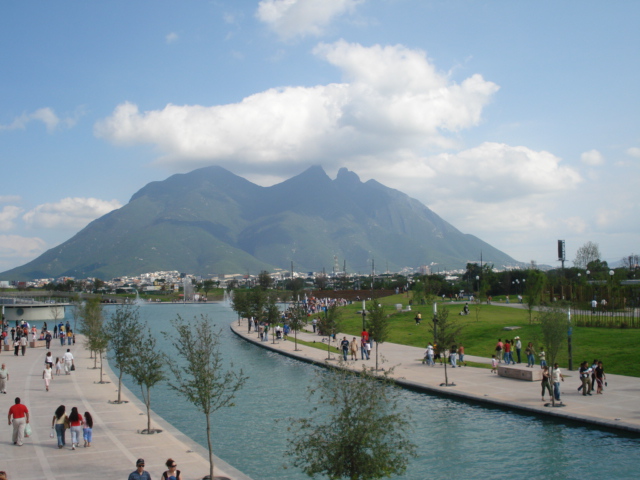
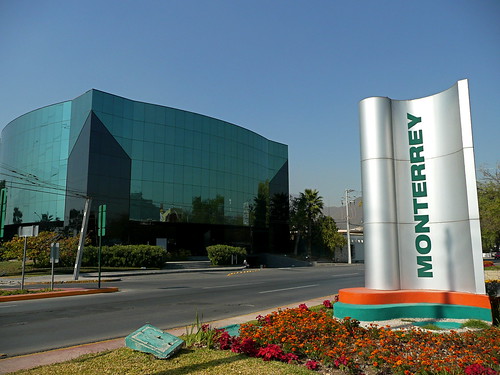
Monterrey Nuevo Leon : Mexico's Industrial Powerhouse


Monterrey Nuevo Leon, which translates to Royal Mountain or Mount Royal or Montreal in French, is one of the most impressive cities of the world, combining strong industrial prowess, culture and a vibrant and exciting nightlife. Monterrey is many times called “The Sultana of the North” and the city’s inhabitants are typically referred to as RegioMontanos or RegioMontanas.

Monterrey’s industrial might is notable especially in the areas of steel, cement, glass, financial services, as well as its ability to draw foreign investments in the areas of high technology and telecommunications. The Monterrey Steel Foudry, or Fundidora operated from 1900 until 1986 and is one of the industrial establishments credited with helping achieve the city’s growth and financial prowess. The Cervecería Cuauhtémoc Moctezuma produces world class beers such as Tecate and Sol (commonly refereed to as Rubias) and the excellent local Indio beer (referred to as : Morena). The Cerveceria was founded by the Garza Sada family, one of the pillars of the Monterrey business community and is currently owned by Heineken International.


Monterrey Nuevo Leon is also home to world class higher education institutions such as the Tec de Monterrey which was founded through the philanthropic activity of Don Eugenio Garza Sada, an MIT graduate noted philanthropist and established businessman who died at the hands of kidnappers. The Tec, or ITESM, is active in the areas of the applied sciences and engineering and its research activities and curricula are equivalent to the level of institutions such as Sanford, Berkeley and MIT.

The city’s exciting nightlife consists of an elaborate array of districts and municipalities hosting a variety of entertainment facilities including restaurants (Chinese, Greek, Italian and Tex Mex), bars, malls, parks supported by strong infrastructure and impressive hotels.

A midnight stroll under a full Mexican moon in the romantic El Barrio Antiguo (the old quarter) is highly recommended, while the youthful fervor of the posh municipality of San Pedro Garza Garcia which also boasts a very active nightlife is ideal for bar hopping, shopping, dining and general entertainment. Monterrey’s and San Pedro Garza Garcia’s nightlife are sure to leave someone with pleasant, romantic and unforgettable memories.
The nearby resorts of La Laguna (The Lagoon) and Cola de Caballo (Horse’s Tail) just outside of Monterrey provide an ideal place for summer camping, hiking and outing.
Access to the Monterrey Nuevo Leon can be achieved through a number of highways as well as the local Mariano Escobedo Airport which connects to most international airports such as Fort Worth and Houston.

The Girl from El Valle San Pedro, Monterrey


I dated a girl from El valle de san pedro (otherwise known as San Pedro Garza Garcia; one of the loveliest parts of Monterrey), Monterrey Nuevo Leon Mexico.


If you go to Monterrey, and take vasconcelos all the way to Gomez Morin boulevard (if I remember correctly) and then drive all the way up to the Mountain, you end up in a checkpoint that has a bar, and guards on both sides.


Well, if you manage to get past that checkpoint and continue heading, you’ll end up in a house that resembles a castle.


Lucia lived (and still does) in that mansion.
Anyway, on one of our dates (it was always a pleasure to date Lucia since as a RegioMontana she has milky white skin, brown long her and lovely green eyes) we had dinner at el tenedor restaurant in el valle, and then went to the organization Ramirez multicinemas to watch “vampires” (Lucia loves horror films).


Since Lucia comes from one of the industrial families of Monterrey, on each and every of our dates she was surrounded by about 8 to 9 bodyguards. Lucia was not allowed to go anywhere without her bodyguards since her family was afraid of abduction. Recall that the notable Senior Garza Sada, a fellow graduate of M.I.T., died in the hands of extremists, so one can understand the fear that a lot of families in El Valle have about abduction.


Since Lucia was always surrounded by these men, I began to refer to them as her jail cell.
A couple of years later, after I had left Mexico, in a nice warm September I visited a nearby beach close to Athens. I usually do this since in September since all the tourists (local and international) are gone so I have this whole beach to myself.


A warm Mediterranean breeze engulfed me as I approached the inviting sea and dove in for a swim.
I thought of poor Lucia.


Like king Midas, she had all the money in the world and was a prisoner of this wealth. While I had the whole beach to myself, the lovely Greek sea, and it cost me nothing….
Can you really put a price on freedom??


I wonder….


T-Mobile takes on LTE with HSPA+ 42 Mbps launch in 55 markets


May 24, 2011 — 12:01am ET By Mike Dano

T-Mobile USA announced it will launch HSPA+ 42 Mbps speeds in 55 markets across the United States, including Atlanta, Chicago, Denver, Detroit, Dallas, Houston, Los Angeles, Miami, New Orleans, Phoenix and elsewhere.


The launch essentially doubles the speeds provided by T-Mobile's current HSPA+ 21 Mbps network, though the carrier said it will continue to brand the offering as a 4G service.


T-Mobile announced at the Consumer Electronics Show in January that it would upgrade its HSPA network to HSPA+ 42 technology. At the time, the carrier said HSPA+ 42 will provide speeds comparable with Verizon Wireless' (NYSE:VZ) recently launched LTE network. T-Mobile said it tested T-Mobile's planned HSPA+ 42 upgrade against Verizon's LTE network in Las Vegas, and found both networks provided average download speeds of around 8 Mbps.


To support the HSPA+ 42 launch, T-Mobile said it will begin selling its first 42 Mbps-capable product, the T-Mobile Rocket 3.0 laptop stick, starting May 25. Built by ZTE, the stick will sell for $99.99 after a $50 mail-in rebate and with a qualifying mobile broadband plan (2 GB or higher) on a two year service agreement, with voice line and enrollment in Easy Pay. Customers can also purchase the T-Mobile Rocket 3.0 without a contract for $199.99.


Earlier this year, T-Mobile's CTO Neville Ray said the carrier expects to cover around 140 million POPs with HSPA+ 42 network technology by year-end.


AT&T Mobility (NYSE:T) announced in March its plans to acquire T-Mobile--an action that could scramble T-Mobile's network upgrade progress. AT&T has said if the deal goes through, it would work to move customers off of T-Mobile's UMTS service, which currently runs on its 1700 MHz AWS spectrum, and onto AT&T's 1900 MHz spectrum. AT&T will then run its LTE service over its 700 MHz spectrum and over AWS spectrum. In other words, T-Mobile customers with 3G handsets will eventually have to purchase new devices that work with AT&T's frequencies.


AT&T and T-Mobile expect the transaction to close sometime early next year.

Friday, May 20, 2011

Apple Ignores MAC Defender Malware


By Paul Mah

Apple (NASDAQ: APPL) is seeing a spike in malware infections from a Trojan called "Mac Defender," according to investigations conducted separately by Ed Bott of ZDNet and Jacqui Cheng of Ars Technica. A number of support specialists and Apple Store Geniuses have apparently observed an increase in malware instances on the Mac platform, though others have said that they have not noticed anything amiss. The clincher, however, is an internal memo with a Last Modified date of May 16 from Apple instructing Geniuses not to remove Mac Defender, together with explicit instructions "not to confirm or deny" the presence of the malware. It does appear that Mac Defender is indeed making the rounds.


Ironically, the increasing popularity of MacBook Pro and MacBook Air laptops is no doubt a factor that is attracting hackers to the OS X platform. To be clear, this is by no means an epidemic, though at least one Apple Certified Mac Technician interviewed by Ars Technica says that Mac Defender "appears to have impacted more of the general Mac-using public than all the previous Trojans I've dealt with."
Mac Defender is turning out to be somewhat of an epidemic that neither Apple, nor Mac users seem prepared for. The Mac malware has caught the Apple ecosystem off guard and threatens to shatter the reality distortion field that Apple thrives on.

Apple, and the Apple faithful would like to pretend that Mac malware doesn't exist. But, thanks to some awesome investigative reporting by Ed Bott, Jacqui Cheng, and others, we know that AppleCare technicians are seeing an explosion of malware issues, and that Apple has specifically directed support technicians not to get involved.
.Cheng points out that there is at least tacit acceptance by Apple that the possibility for malware exists because Apple actually sells multiple malware protection products. And, although Apple Store reps are quick to point out the superior security and lack of malware concerns on the Mac, internally Apple mandates the use of Norton malware protection.


A certain Apple loyalist recently called me--and a variety of respected tech writers--out for having the audacity to point out that Mac OS X is not invulnerable and that the potential for Mac malware is steadily rising. Really, I think Gruber was just being lazy that day because his contribution amounts to a single word, and the rest of the article is just a copy and paste of other content like mine.
I get it. Apple products are better. They are magic. They just work. Except when they're not, and they don't. If you look past the smoke and mirrors, you might be disappointed to find out that they're not really that different.


To be fair, I agree that there are fundamental aspects of the OS itself that make Mac OS X more secure, or harder to exploit to some extent. However, I still maintain that the real reason that Macs aren't plagued by more malware is that the platform represents such negligible market share that it's not worth the effort for malware developers.
Ultimately, though, more secure is a long, long way from completely secure or invulnerable. But, many think that Macs are just secure. Period. Mac users who have partaken of that Koolaid and developed some sort of belief that they are impervious to attack by virtue of using a Mac are learning in droves that reality falls short of the myth.


Malware is not the only concern. Many of the biggest threats online are simple phishing attacks and identity theft that are platform agnostic and have nothing to do with the security of the OS. But, the fallacy that Macs are just secure causes users to be naive about security in general. It is time for Mac users to take off the Apple colored glasses and realize that security is a concern.


Don't get me wrong. I like Apple (except for the abomination called iTunes). I love my iPhone and my iPad, and I am seriously considering a MacBook Air. But, I am not naive enough to believe they are secure by default. The false sense of security that comes from believing the Apple hype does users a disservice and leads them to get caught with their proverbial pants down when it comes to the various threats online.

LTE will boost capacity 230 percent over 3G according to British OfCom


4G technology will bring over three times more mobile broadband capacity to the UK from 2013, Ofcom said on Thursday.

According to research conducted by the telecoms regulator, LTE (long-term evolution) is 230 percent more spectrally efficient than HSPA, the 3G technology that currently provides cellular data connectivity to the country. However, LTE was not the only 4G technology considered in the research — Ofcom also looked at emerging and later generations of LTE's big rival, WiMax.


Stephen Unger, Ofcom's chief technology officer, said the efficiency of 4G spectrum use would increase even more by the end of the decade, by which point technologies such as the future LTE Advanced standard should be in place.


"4G mobile technologies will be able to send more information than 3G, for a given amount of spectrum," Unger said in a statement. "This increased efficiency means that 4G networks will be able to support increased data rates and more users.


"The research that we commissioned indicates that early 4G mobile networks with standard configurations will be 3.3 times (230 percent) more spectrally efficient than today's standard 3G networks," Unger continued. "To put this in context, a user on an early 4G network will be able to download a video in around a third of the time it takes today on a 3G network. It is anticipated that this efficiency will increase to approximately 5.5 times (450 percent) by 2020."


A user on an early 4G network will be able to download a video in around a third of the time it takes today on a 3G network.
– Stephen Unger, Ofcom


Ofcom conducted the research to better inform its strategic spectrum management work. The 3.3-times boost is in comparison with the HSPA technology being used by 2011's handsets, although compared with "emerging, high-end 3G configurations" that use multiple antennas and more efficient modulation, 4G will only provide a 1.2-times spectral efficiency increase, Ofcom said.


The increased spectral efficiency of 4G will not in itself be enough to satisfy the growing thirst for mobile broadband, Ofcom added, noting that the upcoming auctions of the 800MHz and 2.6GHz bands will also be necessary to meet demand.


"Finally, mobile networks will also need to be designed intelligently to ensure the best use of spectrum," the regulator said. "In particular, the research anticipates a greater use of small cells to meet demand in specific areas."

EU Data Roaming to Become Cheaper


The costs of using mobile data services while travelling within Europe could fall drastically if upcoming proposals from digital agenda commissioner Neelie Kroes become law.

ZDNet UK has learned that European Commission is looking to introduce tough new proposals on data-roaming charges.


ZDNet UK understands the proposals, due to be unveiled on 22 June, will contain a triumvirate of measures combining retail price caps with deeper, structural changes intended to give people greater ability to choose between data-roaming packages. This would make it cheaper for people with smartphones such as the iPhone, or tablets such as the iPad or Xoom, to use the internet on those devices while travelling within the EU on holiday or business.


According to a source familiar with the situation, the proposals would also see retail caps for voice and text-messaging continue to fall, as they have been doing since the Commission addressed those services in 2007. Kroes has repeatedly stated that she wants to see the difference between roaming and domestic prices fall to zero within the EU by 2015, a goal that is crucial to her Digital Agenda and the single European market as a whole.


If adopted by the college of commissioners, then approved by the European Parliament and the Council of the European Union, the new rules would come into force on 1 July, 2012, when the current regulatory regime expires, and apply until 2016.


Under existing rules, operators are limited in the amount they can charge each other to let customers roam between networks — that cap will fall on 1 July, 2011 from €0.80 to €0.50 per megabyte — but there is no cap on the amount an operator can charge its customers.


This is a major reason why out-of-bundle retail prices still cost between £1-£3 per megabyte within Europe. That is less than the £3-£10 charged for those travelling outside the EU, but still represents a significant mark-up on the actual penny-a-megabyte cost of providing data-roaming services.

According to the source, the new retail caps would start out at €0.90 per megabyte, falling to €0.70 in 2013 and €0.50 in 2014. However, the Commission would also force operators to let their customers split off their roaming mobile contracts from their domestic contracts, if they want to do so.

The move would create competition where currently there is none. A major reason prices are so high at the moment is that most people choose their mobile provider based on the prices they get charged in their home country. Once they cross national borders, they have no choice as to who provides their mobile data coverage, and how much they, as the customer, get charged.


The Commission's proposals are intended to let people choose between competitively-priced data-roaming deals. Unlike the workaround of using local SIM cards to avoid high roaming charges, this approach would also let people keep using their existing mobile number.

However, the Commission does not intend to stop there, the source said. A second structural change would oblige operators to give mobile virtual network operators (MVNOs; operators that do not run their own physical network) from other EU countries access to their networks on fair and reasonable terms.
This would mean a UK-based MVNO such as Tesco Mobile, for example, would have the right to demand access to Deutsche Telekom's network in Germany for Tesco Mobile's customers.


The Commission would also impose a cap on the amount Deutsche Telekom could charge Tesco Mobile for this access. Again, this second structural measure is intended to boost competition and provide customers with more choice.


"In recognition of the fact that those measures might take a while to give rise to more competition, the current caps on voice and text messaging would remain and indeed be gradually decreased, and — in view of the fact that there are humongously large profit margins at the moment on data — there would be retail price caps for the first time," the source said.

Nick White, the executive vice president of business telecoms group Intug, told ZDNet UK on Tuesday that the roaming charge "scourge" has "afflicted cross-border trade based on mobile communications".

"It would seem that the Commission's next phase of regulation, if confirmed, should at least make progress towards the goal of aligning roaming rates with domestic rates and improving the prospects for multinational MVNO offers," White said.


The GSM Association (GSMA), which represents mobile operators, declined to comment on the proposals as it said to do so would be speculative.


Telefonica, the company that owns the UK operator O2, said in April it was sure the difference between data-roaming rates and the data rates charged domestically would reach zero by 2015, as Kroes has demanded. However, it claimed this would happen without new regulation — a scenario that the European Commission clearly does not trust to take place.


According to Morgan Stanley analyst Nick Delfas, the eradication of roaming premiums within the EU would not have a "huge impact" on operators.

Eat More While Losing Weight


A number of people may at one or another point in their lives experience a weight problem.


Many people who feel, or are, overweight try to eliminate the extra pounds by eating less; this crash attempt many times leads to detrimental health effects.Undoubtedly, overweight issues should be first be brought to the attention of a qualified physician and dietitian who is the most suitable to prescribe a proper strategy that will eventually, with patience, lead to the desired effects.


Crash diets frequently lead to weight gain rather than weight loss since the individual’s body, or metabolism, responds in such a way as to lead the individual to massive eating, or pigging out, to replace the perceived loss of energy.


One of the largest research projects called Diogenes, and dealing with proper nourishment and effective dieting has lead to the conclusion that effective weight loss (without any collateral damage or related side effects) can be accomplished by a high protein low carbohydrate diet. This diet must be accompanied by ample high fiber, fruit and vegetable intakes as university of Copenhagen researchers point out in their treatise in the New England Journal of Medicine.


The research which involved a group of about 950 individuals concludes that individuals following such a diet can eat to their limits, without incurring any extra weight while actually positioning their bodily functions towards actual weight loss.The related control group which usually ate to the brim, actually gained about half a kilo in a six month period, while other groups following other diets gained about two kilos.


The consumption of high protein from foods such as meat, fish, poultry, eggs, low fat dairy products, beans and nuts leads to faster intake satisfaction than other food combinations, and effectively less fat.


The strategy detailed by the Danish scientists comes terribly close to what is known as the Atkins diet, which is followed by a number of well known Hollywood celebrities. The scientists however emphasize that while the Atkins method involves 50% of daily calorie intake from protein, the Diogenes diet invokes a 23% protein based calorie intake.


The latest research results suggest that a classical Greek salad, the crown jewel of the so-called Mediterranean diet, which incorporates fresh tomatoes, fresh green peppers, olives, onions, cucumber, capers, parsley, topped with feta cheese and lavishly embellished with oregano and ample virgin olive oil may be an ideal food candidate for those wishing to engage in a fulfilling healthy and high energy low fat meal.


Sources:


The New England Journal of Medicine, Diets of High and Low Protein Content

Slim Waist Cuisine


Mediterranean cuisine, commonly found on the tables of Greek, Italian and Spanish households offers a nutritiously healthy meal, at an attractive price full of energy, low in calories while light on the digestive system.


Mediterranean cuisine in addition to the fresh fish products which are usually tastier than their ocean counterparts, due in part to the saltier Mediterranean waters, consist of fresh vegetables, local cheeses and of course virgin olive oil.


Mediterranean dishes are always accompanied by wheat products, usually bread and have been proven to reduce toxins and provide an effective guard against a number of diseases.Typical Mediterranean cuisine is also excellent for weight control since the usually low fat high protein food contents (such as fresh fish, wild greens, virgin olive oil and fresh veggies) provide complete all around nourishment, satisfying the hardiest of appetites, without the equivalent cholesterol based intakes of meats and related by products.


Indeed, historic data has proven that those that traditionally adhered to Mediterranean cuisine and avoided today’s fast food based deep fried dishes, enjoyed a healthier lifestyle with less digestive system related problems; women especially enjoyed slimmer waist lines without engaging in unhealthy in time for the beach crash diets often resulting in numerous problems including anorexic behaviors and related ailments.


One of the most popular dishes, from the island of Crete –which is well known for its traditionally tasty Mediterranean approach to cooking- is a dish known as Dakos.This recipe’s ingredients can be found in most supermarkets or local grocery stores, but the reader is advised to choose products carefully and to insist on fresh products where possible since one of the powers of the Mediterranean dish, is the rich vitamin supply that is characteristic of fresh produce such as veggies, fruits, fish, olive oil and of course cheese.


Dakos is a Cretan dry and Crusty brown bread which is usually sliced in two, or cut into thick crumbs or pieces and served with the appropriate embellishments.The dish is made by first of all grating fresh tomatoes, green peppers, and Feta cheese and spreading the grated product over the Dakos break.


The topping is then garnished with oregano and capers, and olives are placed around the dish to add to the taste. Fresh olive oil is then lavishly poured over the product to enhance the dish’s taste and soften the crusty bread making it more palatable and easier to chew.Dakos is a quick, tasty and easy meal that can be prepared in under ten minutes, and that can offer a nutritious fulfilling meal anytime, anywhere.

Tuesday, May 17, 2011

Kristen


Brother Dave


And thus ever, by day and by night, under the sun and under the stars, climbing the dusty hills and toiling along the weary plains, journeying by land and journeying by sea, coming and going on strangely, to meet and to act and react on one another, move all we restless travellers through the pilgrimage of life.” Charles Dickens, Little Dorrit


I first met Dave back in 1995, while teaching a telecommunications course to some senior engineering colleagues.


It was one of those courses that I loved to teach since I was, in essence, getting paid to teach what I previously had been gotten paid to design. I also relished the fact that I was abandoning for a couple of weeks the freezing Canadian winter in favour of the warm plus twenty five degrees Celsius Texas weather.

Dave was the senior manager of the group I was assigned to instruct, a group that would eventually spearhead the push of mobile broadband communication systems to the American market. Dave and I, aside from our technical background, discovered that we had numerous other things in common and became exceptionally good friends. Our friendship became so strong that it would eventually evolve into a brotherly bond that would prove to stand the test of time.


Dave at that time was madly in love and matrimonially engaged to a lovely young woman named Kristen. Their wedding was scheduled to take place in December, right before the Christmas Season.
A couple of months before the wedding, Kristen was diagnosed with an advanced stage of mesothelioma and was given 3 months to live.


Dave being a virtuous man of character and strength, decided to nevertheless proceed with the wedding; the wedding ceremony took place at the appointed date and time, at Kristen’s house.

I flew in from Montreal to do the honours as Dave’s best man.


The wedding ceremony was necessarily performed in Kristen’s bedroom since Kristen – who looked ravishing in her bridal gown - could no longer walk because of the metastatic tumour in her spinal cord.
A couple of weeks later Kristen passed away.


About two years after Kristen’s passing, in 1997 and while I was working and living in Mexico, Dave paid me a visit and stayed at my place for about 2 weeks. He informed me that he was leaving the US and heading for the Middle East on some serious business. He left me, as a symbol of our friendship and fraternal bond, a ring.
I lost contact with Dave after that and as the years rolled on, I returned to Europe and decided to have a family.


One sunny afternoon, as I sat on the place where sea meets shore idly sipping cold ale and languidly helping my kids build sandcastles, I received a cablegram that my friend and brother David left this world for the Elysian Fields, to join his eternal love Kristen.


I still have his ring…

The Quintessential Greek Woman


“Herself again a wife – a mother – lovingly watchful of her children, ever careful that they should have a childhood of the mind no less than a childhood of the body, as knowing it to be even a more beautiful thing, and a possession, any hoarded scrap of which, is a blessing and happiness to the wisest? Did Louisa see this? Such a thing was never to be." ~Charles Dickens, Hard Times


Born into a society which boasts respect for ancient values while praising the virtues of modern day human commoditization, the quintessential Hellenic female is expected from day one to serve two masters: Tradition, and the expectations of the modern day industrial world.


In a country where 97 percent of the population is deemed literate with higher education levels surpassing the 50% threshold, the modern day Greek woman is pressured from early childhood, at the risk of being labelled a “doormat”, to achieve the highest education level possible, become a successful careerist, and by the time she is in her mid thirties marry, procreate (so as not to be chastised by members of her gender as barren or frigid) possibly with the “magic” of modern medical technology, while providing for her family, her employer, and the State at large.

Job equality in Greece is commonly implemented by adapting the human to the working environment and not the working environment to the human. In the not so distant past, the majority of the working population was male and job design adhered -and still conforms - to the working habits of a masculine dominated workforce.
Jobs were designed, implemented and supervised by fanatics of a Mediterranean form of scientific management where the labourer -blue or white collar- was expected to be complacent and thankful.


The modern day Greek woman is expected to work in this environment, to conform to the existing job parameters, and to work 12 hour shifts. Family and children are out of the question for the modern day quintessential Greek woman, who is always viewed with suspicion by potential employers, lest the employer incurs extra costs by a possible pregnancy.


It thus goes without saying that the tough Greek private sector and the frequent outrageous working conditions (which may frequently include double standards with overshadowing harassment tendencies) induce many a Greek female to opt for the once secure –regarded by many as inefficient- public sector; whose humane working conditions and limited hours, strong union representation, highly effective grievance mechanisms, and controlled environment allow a woman to rightly earn her daily bread while simultaneously reap the benefits and of a fulfilling private and family life.


The unavailability of public and company day care centres –taken for granted in western societies- which are considered a luxurious non necessity in the Hellenic working world -which prizes profits over posterity- leave underpaid and overworked Greek mothers in general and single mothers in particular at the mercy of expensive nannies; or out of reach private day-care centres.


The Greek corporate biosphere views the modern day Greek woman as equal to her male counterpart: If a man can dig a ditch in one half of an hour so should a woman in addition to the strict requirement that the quintessential Greek female maintain that much desired charm, sensuality, attractiveness and mystique that characterizes Mediterranean femininity.


The Quintessential Greek Woman:


Caring daughter,brazen careerist,welcoming lover,warm companion,lovely bride, loving wife, and responsible single mother in a society that demands everything, but returns nothing.

Monday, May 16, 2011

Nokia Terminates Ovi


Nokia (NYSE:NOK) will discontinue its Ovi mobile services umbrella this summer, continuing its existing initiatives and rolling out new efforts under the Nokia brand.


The transition, slated to begin in July, is expected to continue throughout late 2012 and spans across all Ovi solutions and international markets--no disruption of the device maker's service roadmaps is expected, and Nokia adds that consumers who purchase a new Nokia smartphone or feature phone in the coming months will see the new branding in place on most preloaded services.


"By centralizing our services identity under one brand, not two, we will reinforce the powerful master brand of Nokia and unify our brand architecture," said Nokia's CMO Jerri DeVard on the Nokia Conversations blog. "Our mobile experiences are tightly integrated with our devices--there is no longer a differentiation."Nokia introduced Ovi in August 2007. Ovi--"door" in Nokia's native Finnish--heralded the company's expansion beyond mobile devices and platforms into a range of web and data services.


Last month, the company said its Ovi Store mobile content marketplace now tops 5 million downloads each day, adding the storefront has grown by nearly eight times over during the last year to over 40,000 apps.Earlier this year, Nokia announced it will embrace Microsoft (NASDAQ:MSFT)'s Windows Phone 7 mobile operating system as its primary smartphone platform. Per terms of the agreement, Nokia and Microsoft will forge a worldwide mobile ecosystem integrating their respective assets--for example, Microsoft's Bing engine will power search across Nokia devices and services, and Microsoft assets like Bing and AdCenter will incorporate the Nokia Maps solution.


Last month, Nokia stated it will transfer its Symbian software activities as well as about 3,000 employees to global management consulting, technology services and outsourcing firm Accenture as part of its ongoing global workforce and site operations consolidations alignment. Per terms of the agreement, Accenture will provide Symbian-based software development and support services for present and future Nokia smartphones, also supplying Windows Phone-based mobility software, business and operational services to Nokia and other ecosystem participants. Nokia expects to sell roughly 150 million additional Symbian units in the years ahead despite the transition to Windows Phone 7.