
Thursday, January 26, 2012

Costa Concordia Shipwreck : Costa Crociere

On 13 January 2012 Costa Concordia struck a rock[9][10] which tore a 160 ft long hole in her hull, and eventuallycapsized[11][12] in shallow water in the Tyrrhenian Sea just off the shore of Isola del Giglio, near the western coast of Italy. Most of the 3,229 passengers and 1,023 crew were saved; as of 24 January 2012 the bodies of fifteen passengers and one crew member had been found, and the search continued, with seventeen people known to be missing.[13][14][15] The head of the Italian Civil Protection Agency said that there could have been more people not registered to be on the vessel ("illegals") aboard[13].
As of 22 January 2012 the ship was lying on her side in an unsteady position on a rocky underwater ledge with most of her structure above water[16], and in danger of sinking into a 70 m-deep trough.[17] Industry experts believe that the ship may be a constructive total loss.
Tuesday, January 24, 2012
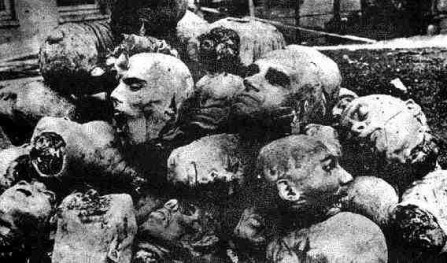
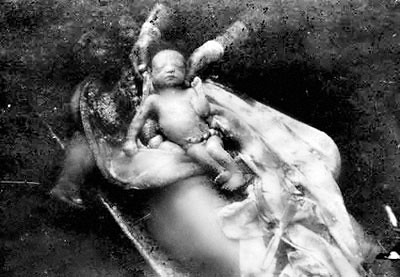
France Recognizes Armenian Genocide caused by Turkey


Friday, January 20, 2012
Why Kodak’s bankruptcy should scare Nokia
Yesterday, a friend of mine, someone who is quite savvy about technology and the startup landscape stopped by for a chat. Our conversation veered towards the state of the web, media and of course Silicon Valley. The gist of his argument was that in Silicon Valley we have big waves that are followed by many tiny waves and they all come in a cluster. You just need to be riding one of those waves – depending on the boldness of your idea, willingness to risk it all and adapting to a new way of thinking. And if you don’t, then you miss your chance to profit from it.
His words were ringing in my ears when I turned on the computer this morning and read about Kodak’s bankruptcy. Shocking (and sad) as it might be, it is not all that surprising. People have been watching the company’s slow free fall for years. The Economist has a great rundown of what went wrongat the company — I recommend you read that and skip all the news-y nonsense – and my key takeaway from that wonderful piece: you cannot fight the future.
Companies that once were large and massive and failed to adjust to the new reality have been left behind. Xerox that owned the photocopying industry is now a small player in what was essentially its core competency — document management. AT&T used to be a giant wireline phone company that controlled how we communicated with each other. Now it is a cellphone provider and only a component of the way we communicate. Why? Because communication itself has since moved on to a new kind of network and isn’t limited by per-minute billing.
No coming back

Kodak Logo: through the ages
As my friend Pip Coburn says, turnarounds never turn. Kodak has been in restructuring mode for 15 years – cutting headcount, closing factories, tightening belts and squeezing rocks for blood. In other words — the company isn’t fat in a traditional sense. But why none of its strategies worked was because the company took too long and sat on its duff watching digital photography come and eat it for a mid-day snack even though Kodak R&D helped with the digital photo revolution when it launched the first digital camera in 1975.
And yet they failed to do what one of their major competitors – FujiFilm did — embrace digital with both arms and is now thriving. And when Kodak finally did embrace digital in 1993 it did with hesitance that comes when companies are afraid to cannibalize their existing businesses for the sake of the future.
Today Kodak is experimenting with printers, commercial printing and other services as new ways to grow, but one wonders if that will be the path forward. I am pretty sure HP, Cannon and Lexmark have something to say about Kodak’s printing ambitions. And even if it succeeds and survives, it won’t be the Kodak of George Eastman. We might as well call it, a Corporation-Once-Known-As-Kodak!
Kodak, like many other businesses that have failed before it, made one fatal mistake – it forgot the true purpose of its business and instead focused on features, SKUs and products. (I have written about this before.) Kodak continued to define itself by “film” when all it should have done is define itself with “photos” or moments.
Who cared if the photos were on a slide, were printed and placed in albums, in digital cameras or on online sharing services. “The Kodak Moment” is what made that company powerful. Had it looked at the world from that lens it would be been an easy decision to adapt to new technologies and adopt them for benefit of their customers – us! In Mad Men, Don Draper tells the guys from Eastman Kodak when giving a pitch for their slide carousel:
This device isn’t a spaceship. It’s a time machine. It goes backwards, forwards. It takes us to a place where we ache to go again. It’s not called the Wheel. It’s called a Carousel. It lets us travel the way a child travels. Around and around, and back home again… to a place where we know we are loved.
Nokia’s Kodak Moment?

Nokia CEO Stephen Elop
There are many lessons for today’s companies in Kodak’s failure to adapt and eventual bankruptcy. Is Nokia the next Kodak? I hope not – for I like those guys – but Nokia is a likely candidate. Just as Kodak’s internal team was arguing for a digital shift that the top guys ignored, Nokia too, ignored all protestations from its resident experts who argued for an Internet-centric, touch-based and app-driven mobile device. Anyone remember the Nokia 770?
That phone could have been Nokia’s future, instead it is forgotten. Nokia defined itself by a certain kind of a product – the 12-key phone. People at Nokia talked about a multimedia mobile computer, but it couldn’t look beyond those 12 keys. It took Apple and Google to show Nokia how to re-imagine the phone. In doing so they have defined how hundreds of millions view and what they expect from a smartphone. As I have said before – it is too late for the Finnish company.
Sure, Nokia has a brand, global presence and a sizeable marketshare. So did Kodak. It took 132 years, the last 15 of those spent in constant belt tightening, for the photo film company to sink. Having missed the big wave, Nokia doesn’t have the luxury of time.


269 LTE devices confirmed


January 20, 2012: An update to the Status of the LTE Ecosystem report published today by GSA confirms that 57 manufacturers have announced 269 LTE-enabled user devices, which is 36% higher than the number of devices identified in October 2011.
48 LTE-enabled smartphones are now launched, which is 6 times the number of 6 months ago. The number of LTE-enabled tablets has more than doubled in the same period.
Megaupload file-sharing site shut down

Megaupload, one of the internet's largest file-sharing sites, has been shut down by officials in the US.
The site's founders have been charged with violating piracy laws.
Federal prosecutors have accused it of costing copyright holders more than $500m (£320m) in lost revenue. The firm says it was diligent in responding to complaints about pirated material.
In response, the hackers group Anonymous has targeted the FBI and US Department of Justice websites.
The news came a day after anti-piracy law protests, but investigators said they were ordered two weeks ago.
The US Justice Department said that Megaupload's two co-founders Kim Dotcom, formerly known as Kim Schmitz, and Mathias Ortmann were arrested in Auckland, New Zealand along with two other employees of the business at the request of US officials. It added that three other defendants were still at large.
"This action is among the largest criminal copyright cases ever brought by the United States and directly targets the misuse of a public content storage and distribution site to commit and facilitate intellectual property crime," said a statement posted on its website.
The FBI website was intermittently unavailable on Thursday evening due to what officials said was being "treated as a malicious act".
The hackers' group Anonymous said it was carrying out the attacks.
The Motion Picture Association of America's website also suffered disruption.
Third-party sitesThe charges included, conspiracies to commit racketeering, copyright infringement and money laundering.
A federal court in Virginia ordered that 18 domain names associated with the Hong Kong-based firm be seized.
The Justice Department said that more than 20 search warrants had been executed in nine countries, and that approximately $50m (£32m) in assets had been seized.
It claimed that the accused had pursued a business model designed to promote the uploading of copyrighted works.
"The conspirators allegedly paid users whom they specifically knew uploaded infringing content, and publicised their links to users throughout the world," a statement said.
"By actively supporting the use of third-party linking sites to publicise infringing content, the conspirators did not need to publicise such content on the Megaupload site.
"Instead, the indictment alleges that the conspirators manipulated the perception of content available on their servers by not providing a public search function on the Megaupload site and by not including popular infringing content on the publicly available lists of top content downloaded by its users."
Before it was shut down the site posted a statement saying the allegations against it were "grotesquely overblown".
"The fact is that the vast majority of Mega's internet traffic is legitimate, and we are here to stay," it added.
"If the content industry would like to take advantage of our popularity, we are happy to enter into a dialogue. We have some good ideas. Please get in touch."
BlackoutsThe announcement came a day after thousands of websites took part in a "blackout" to protest against the Stop Online Piracy Act (Sopa) and the Protect Intellectual Property Act (Pipa).
The US Chamber of Commerce has defended the proposed laws saying that enforcement agencies "lack the tools" to effectively apply existing intellectual property laws to the digital world.
Industry watchers suggest this latest move may feed into the wider debate.
"Neither of the bills are close to being passed - they need further revision. But it appears that officials are able to use existing tools to go after a business alleged to be inducing piracy," said Gartner's media distribution expert Mike McGuire.
"It begs the question that if you can find and arrest people who are suspected to be involved in piracy using existing laws, then why introduce further regulations which are US-only and potentially damaging?"
Greek Power Suppliers Energa and Hellas Power heading for a Blackout
Energa and Hellas Power have accumulated huge debts to both the Greek National Power Company DEI and the independent power grid network DESMIE. If things continue to go unchecked, both companies are surely headed for bankruptcy and cease of operations, leaving about 200,000 subscribers literally in the dark.
Interestingly, non incumbent power companies in Greece seem to be treading the path of severe debt, similar to the experiences of non incumbent telecom companies again in Greece.
Perhaps for small markets, due to economies of scale, the economic model of a monopoly (through of course proper and effective government regulation and control; something that has yet to be accomplished) works far better than that of limited or unlimited (regulated or non regulated) competition.
Time will tell.
Interestingly, non incumbent power companies in Greece seem to be treading the path of severe debt, similar to the experiences of non incumbent telecom companies again in Greece.
Perhaps for small markets, due to economies of scale, the economic model of a monopoly (through of course proper and effective government regulation and control; something that has yet to be accomplished) works far better than that of limited or unlimited (regulated or non regulated) competition.
Time will tell.
Elton John's Husband Apologizes to Madonna

Elton John’s husband has apologized to Madonna on Facebook, following comments he made that the Queen of Pop didn’t deserve the Golden Globe award she won on Sunday.
John’s husband and producer David Furnish was publically upset after Madonna took home the Best Song award for “Masterpiece,” a song written for her upcoming film, W.E. Elton John was also nominated in the same category for his song “Hello, Hello” from Gnomeo & Juliet. During the Golden Globes, the camera also caught John’s chilly reaction to Madonna’s win.
“Madonna. Best song???? F— off!!!” Furnish wrote on Facebook shortly after the announcement. “Madonna winning Best Original Song truly shows how these awards have nothing to do with merit. Her acceptance speech was embarrassing in it’s [sic] narcissism.”
He also noted that Madonna’s recent criticism of Gaga shows “how desperate she really is.” Madonna recently slammed Lady Gaga in a Nightline interview and called her music “reductive.”
However, Furnish retracted his comments on Thursday, saying it was his passion for Gnomeo & Juliet — which he produced — got the best of him.
“Wow! What a tempest in a teapot,” Furnish said. “My comments regarding The Golden Globes have been blown way out of proportion. My passion for our film Gnomeo & Juliet and belief in Elton’s song really got my emotional juices going.”
“But I must say for the record that I do believe Madonna is a great artist, and that Elton and I wish her all the best for next week’s premiere of the film W.E.,” he added.
According to Us Magazine, Madonna said she hoped her win wouldn’t get to Elton too much, as the two have been known to feud in the past.
“I hope he speaks to me for the next couple of years,” Madonna said. “He’s been known to get mad at me so I don’t know. He’s brilliant and I adore him so he’ll win another award. I don’t feel bad!”
This isn’t the first time a high-profile person has turned to social networking to air frustrations. Here’s a look at other celebrities who have experienced public online meltdowns.
Twitter Fuck ups
Kutcher got into hot water last month when he fired off a tweet defending Penn State coach Joe Paterno after Paterno was implicated in a scandal related to assistant coach Jerry Sandusky’s alleged history of sexually molesting children. “How do you fire Jo Pa? #insult #noclass as a hawkeye fan I find it in poor taste,” the tweet said. Later on, Kutcher tweeted, “Heard Joe was fired, fully recant previous tweet!” and “Didn’t have full story. #admitwhenYoumakemistakes.” Shortly afterwards, Kutcher announced that he was turning over the management of his Twitter account to Katalyst Media, a firm he co-owns.

Comedian Gottfried, who is known for pushing the envelope (he was the first mainstream comedian to joke about 9/11 -- just three weeks after the attacks), tried out some material about the earthquake/tsunami that hit Japan in March, just a few days after the tragedy hit. Within a day or so, Gottfried lost his gig doing the voice of Aflac's duck in that company's commercials.

The volatile singer deleted most of his Twitter timeline last month after he got sick of fans' comments about his ex, Rihanna, whom he was charged with assaulting in 2009.

The former Congressional rep from New York was caught tweeting a lewd picture of himself to a Seattle student named Gennette Cordova in May. Though Weiner initially denied the charge, on June 6, he admitted it and eventually lost his seat.

Cyrus quit Twitter in 2009 by memorably composing a rap about her reasons (the tabloids were using it as fodder for stories) and then performed it on YouTube. Cyrus returned in April. She now has close to 4 million followers.

O'Connor quit Twitter in November because she was "getting too much abuse," according to The Daily Mail. The singer, best known for her 1990 hit "Nothing Compares 2 U," also blamed fans for taking her sex-related comments "too seriously." (O'Connor offers more in a NSFW rant on her website.)

The designer/brand name upset fans in February with a /tweet that made light of the Arab Spring. "Millions are in uproar in #Cairo," he wrote. "Rumor is they heard our new spring collection is now available online at [link]."

Arison, the owner of the Miami Heat, was fined $500,000 in November for tweeting about the NBA lockout. Arison's comment was innocuous, but violated an agreement with the league not to discuss the matter in public.

100 BEST COMPANIES TO WORK FOR
Top 100
Subscribe to:
Posts (Atom)